
Rewind in Ragas
Finding myself through Music and Memories
Welcome to The Soundtrack of My Life .
The other day, I had quite the “When Harry Met Sally” moment when head in my hands, I caught myself thinking, “One day I’ll be sixty… and what will I have to show for my life?”
Another thought followed… What an extraordinary stroke of luck it is, to simply be alive and there is so much to be thankful for.
I’ve never been driven by the need to be exceptional. What has been remarkable though is the way music has been a constant in every chapter of my life.
This series isn’t just about the songs I love. It’s about using those songs to answer a question I’ve been asking all along: Who am I, and how did I become this person? So come along as I revisit the concert of memories behind the music, and the stories and voices that have shaped me.
Carnatic Primer
Swara (m)
A musical notes in an octave in Indian classical music.There are 7 basic swaras. Sa Ri Ga Ma Pa Dha Ni.
Raga (m)
A melodic framework or scale composed of swaras , with rules and gamakas or ornamentations that give a raga its unique identity and emotional weight.
Tala (m)
A rhythmic framework that regulates and measures time in Carnatic Music.
Swarajathi
A musical form that contains musical notes paired with lyrics. It contains simple phrases. It is taught before the Varnam. Contains the Pallavi or the Opening section followed by the Anupallavi or the secondary section followed by one or more Charanams, which are verses first sung with notes and then repeated with lyrics.
Varnam
A foundational form, more complex than a swarajathi that encapsulates the raga’s grammar.
Krithi
It means “Creation” in Sanskrit. A compositional format for a song set to a fixed Raga ( melodic scale ) and Tala ( rhythmic cycle ) . Contains a Pallavi ( refrain) , Anupallavi ( melodic development in lower or higher octaves ) and one or more Charanams (verses).
Tyagaraja
A legendary composer of Carnatic music and devout follower of Lord Rama . He wrote thousands of devotional songs primarily in Teugu , treating music as a spiritual path to God.
Mutthuswami Dikshitar
A legendary South Indian poet, singer and veena player and one of the Musical Trinity of Carnatic Music alongside Tyagarja and Syama Sastri.
“FIRST MOVEMENT”
The Journey is the Lesson
I stare at the clock, my tongue wagging behind my pursed lips. I should have left ten minutes ago. As soon as I hear my manager say “I guess that’s a wrap for today!” , I dash out of the conference room, pack my backpack and rush out of the building.
Foot to the pedal , I snake through rush-hour traffic so I can get home in time. I breathe to steady my pounding heart. “Maybe they are still playing at the playground”, I tell myself. I turn the corner and spot them sitting on the stoop, my nine year old daughter cupping her chin with her hands while her five year old brother is kicking the mulch in the flower beds.
“Mom! you are LATE! AGAIN!” “Sorry Kanna, I’m SO sorry, my meeting ran late.” She stomped ahead into the house as I picked up her bags.
“Mom, Spongebob must be on, can you watch it with me ?”
“No! We can’t!” We have music class today.”
“Can we skip it?, PLEASE!”, my son asks. “Absolutely NOT!”, I say.
I throw some Cheerios and baby carrots into a Ziploc bag, zipping it in a hurry and grab their music books as they wash up. They trudge into the van. I pull out of the driveway.
“Okay, let’s do a quick practice!” “Noooooo!”
“Do you want to be yelled at ? Again”
“Sa Sa Ri Ri Ga Ga Ri Ri…”, my son starts to sing to the crunch of carrots while Cheerios fly across to the front of the car.
“I don’t remember the lyrics!”, “Open your book!”, I say as my daughter starts the first line of the latest Swarajathi she is learning.
Later in the evening, once the homework is put away, the dishwasher loaded, and the last story is read, I put my tired feet up, close my eyes and think of my mother.
I don’t remember every music lesson. But I remember the journeys.
Every Monday evening we would board a crowded bus in Garden Reach for music lessons in Ballygunge, an hour away.
“I want to sit by the window. Please , please, I beg of you! “, I said to my sister as I scrambled to claim the first window seat that opened up.
I’d stick my hand out of the window and trace imaginary lanes through the madness outside, from the safety within. Buses swayed so close to ours, my hands could touch their grimy exteriors. Auto rickshaws, scooters , bicycles, people, hawkers and even buffaloes collided with each other, their trials and tribulations unresolved and blissfully invisible to me.
At that time, it felt like a musical outing, bookended by crispy dosas and jasmine flowers woven into our braids, ending only when we flung our exhausted bodies onto the bed and fell asleep.
Heirloom Harathis
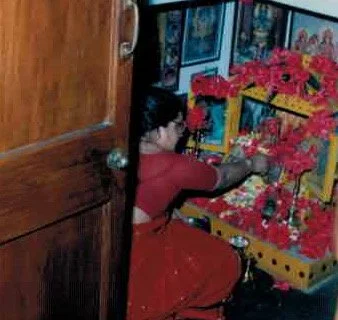
The fragrance of incense wafts into the bedroom, I can see the flicker of the “deepam” with my eyes closed. A pressure cooker whistles. Daddy is screaming British-sounding expletives into the phone after hearing that a train has fallen off its tracks somewhere in his jurisdiction. The maid gently lifts the edge of my blanket so that the rhythm of her broom isn’t interrupted. Half asleep , I tug it back over my feet. The milkman hammers the doorbell with the impatience of a man who has fifty more doorsteps waiting for him.
And above it all, accompanied by the twang of the puja bell, Amma’s determined voice singing the Mangala Haarathi to conclude her morning prayers. A cacophony , no headphones, AirPods, or even a pillow pulled tightly over my ears could ever drown out.
Yet, like signals emerging from the noise, some of these songs were intercepted and etched into memory long after the puja ended. An haarathi to Lord Krishna, set in the raga Brindavana Saranga is one of my favorites. Whenever I am asked to sing a Devi haarathi at a puja and even during my daughter’s wedding, I pick “Jaya Jaya Haarathi”, another family heirloom.
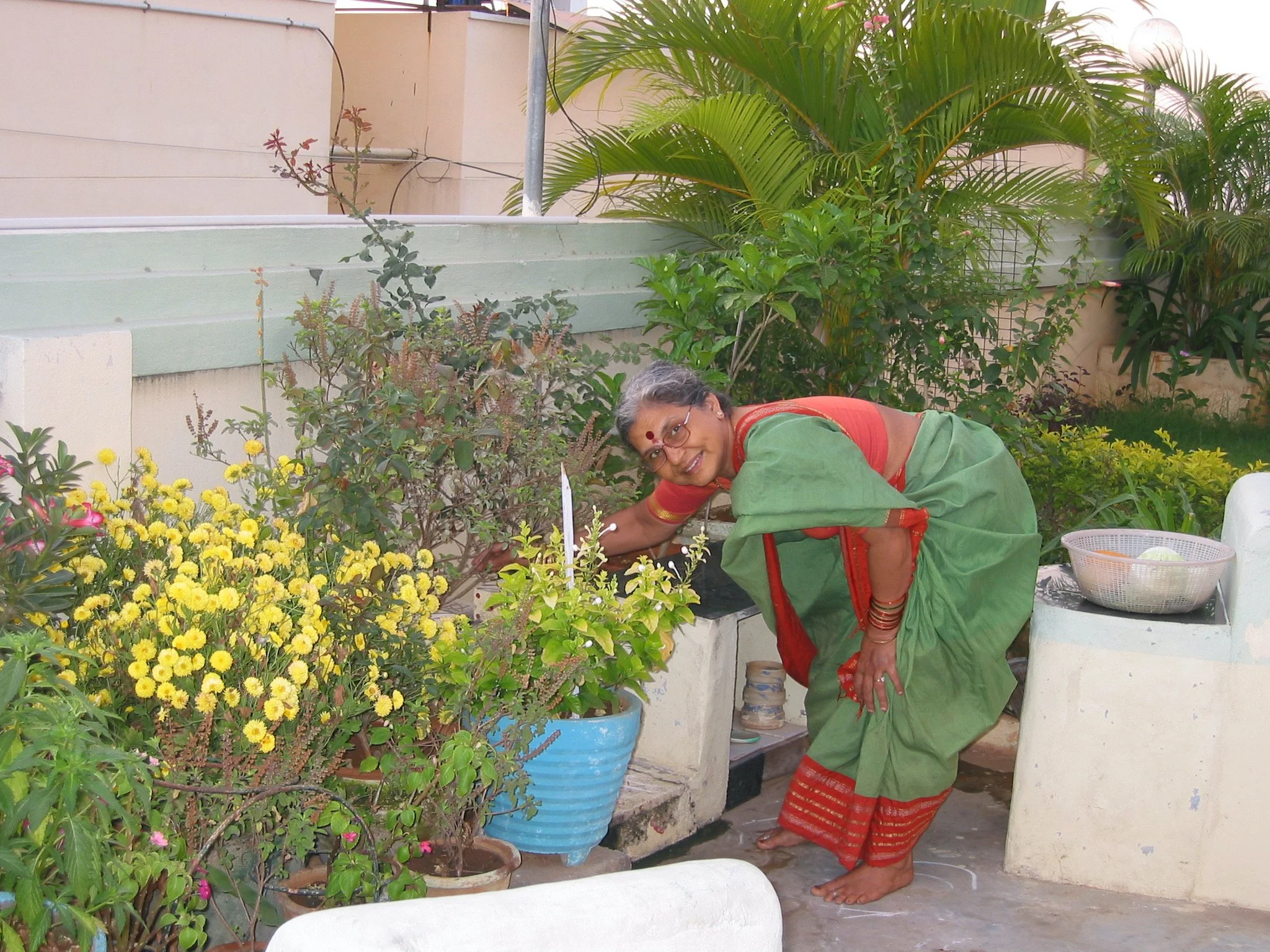
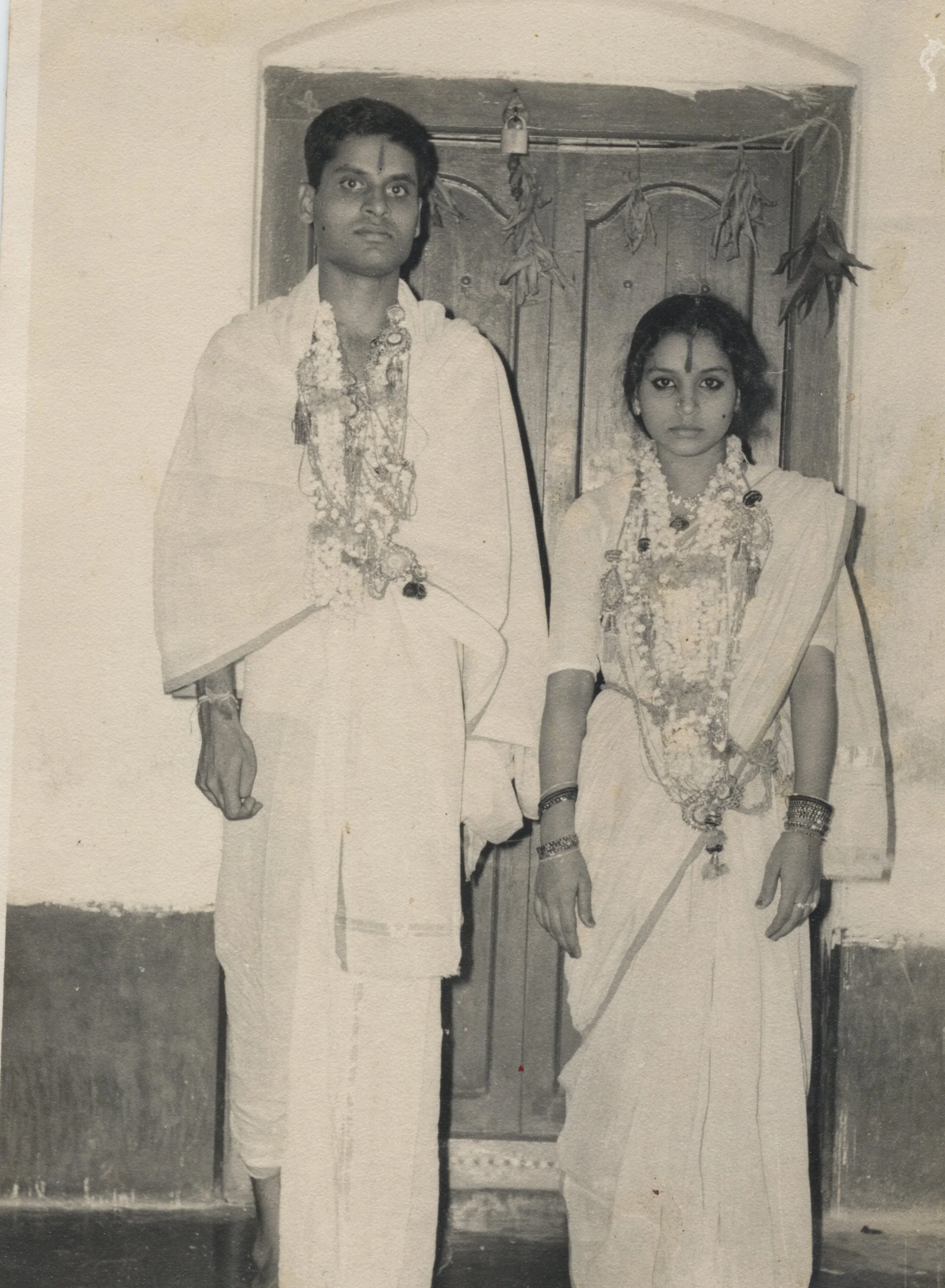
Leaving her hometown of Tanuku as a new bride, she found herself in Kharagpur, a world away. The elegant hairstyles, sleeveless blouses, couples dancing together, evening drinks, and rummy parties of the Railway Colony left her feeling utterly out of place.
“Mrs. Rao, aap bhi kuch gaaiye na?” , someone said to her.
The room fell silent. By the time she finished, she was no longer the shy newcomer from Tanuku or just the wife of Mr Mantena Krishna Rao. She became Mrs. Sita Rao—the Nightingale of the Railway Colony, wherever in India that colony happened to be.
Amma, My First Guru
Her last lesson was my first swarajathi, but she taught me something even more enduring.
My mother described her own music and dance training with a simple Telugu phrase: “Antha Pellichoopulu varikene”, only until the bride-seeing ceremony.
The sigh at the end of that sentence was a window into everything that could have been.
Nicknames
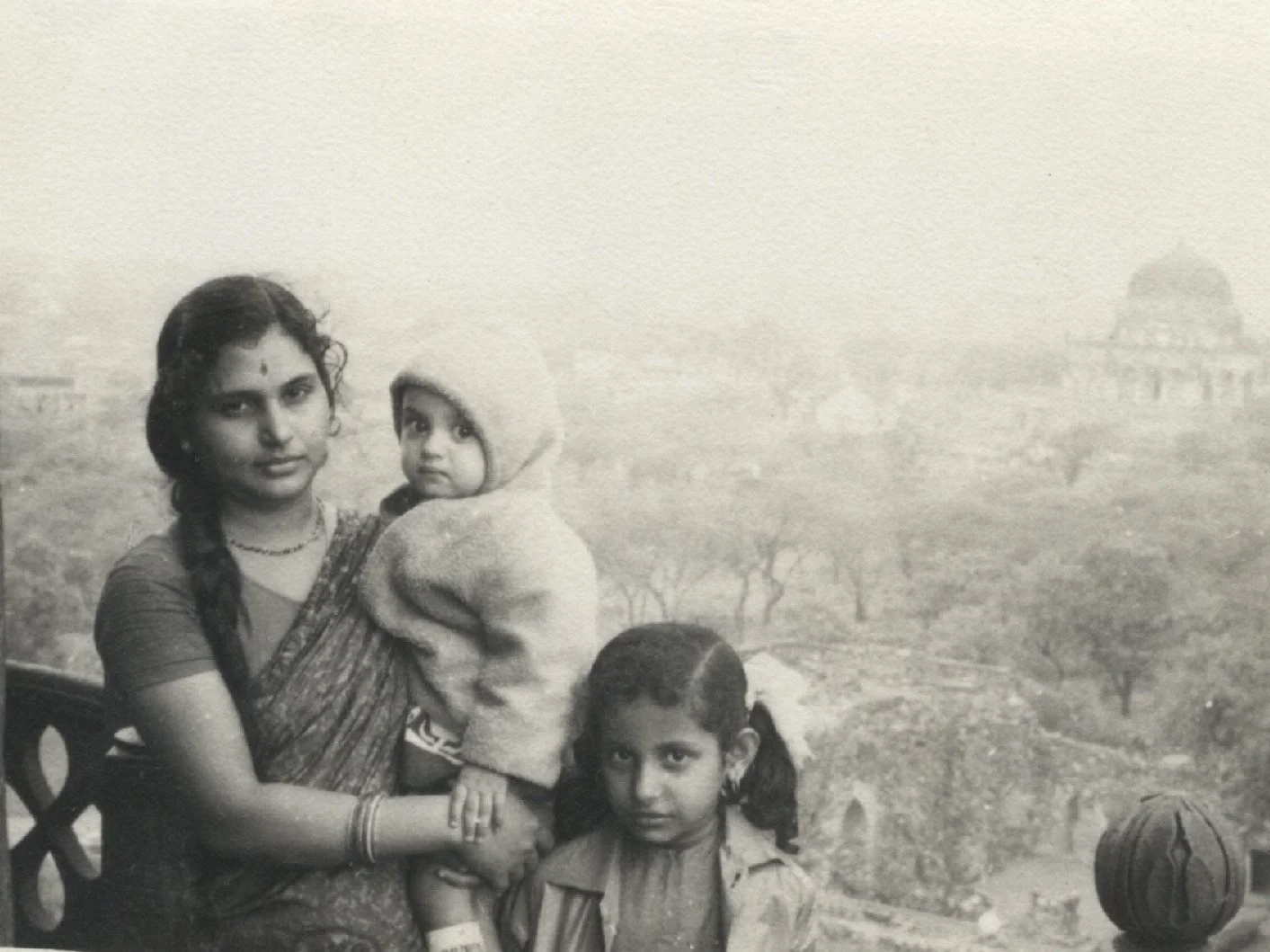
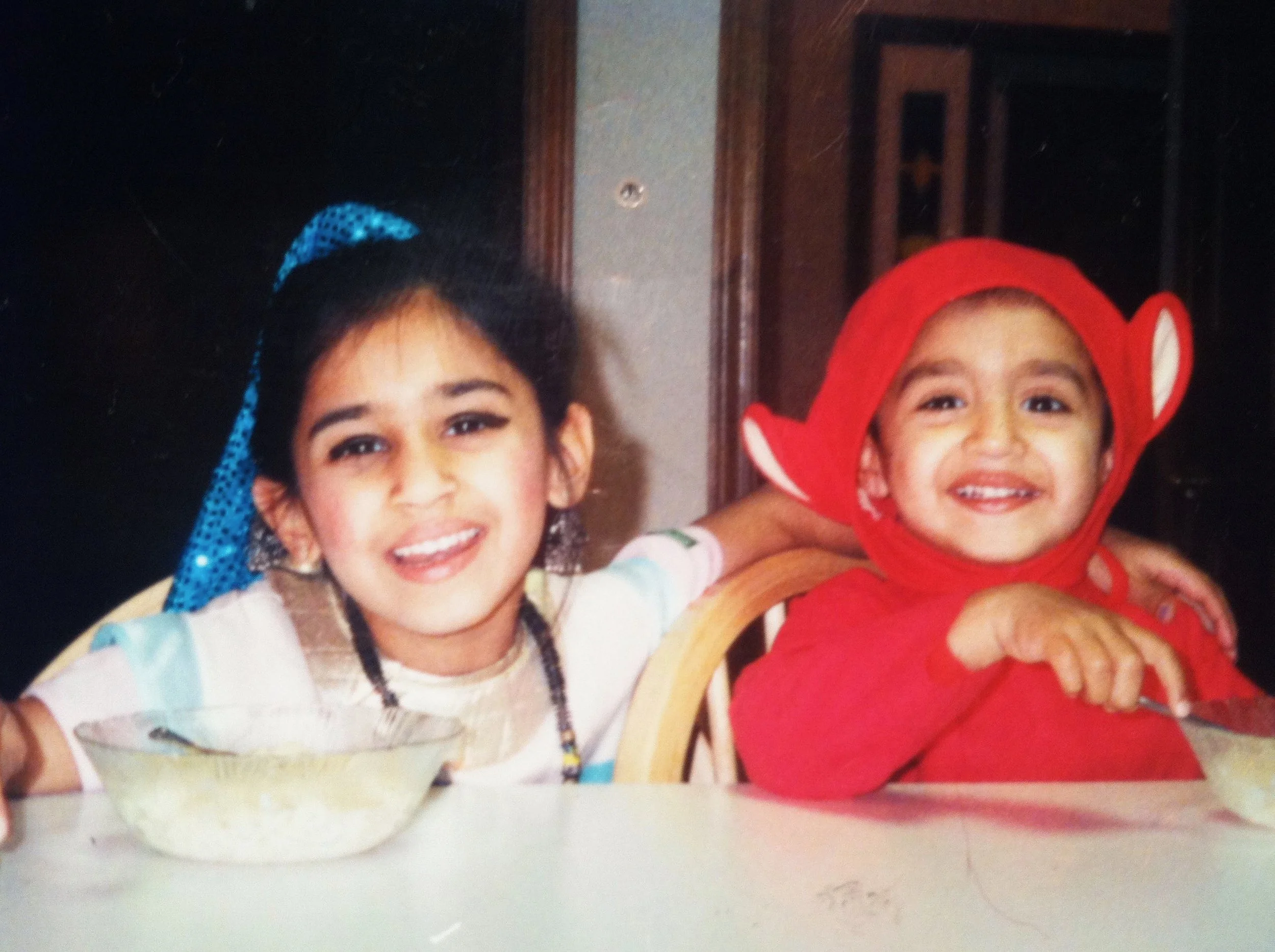
I collected quite a few names growing up. My mother shortened Supriya to Supi, and that one stuck for life.
The suffix depended on the mood she was in. Supi Talli when she had to correct my errors, or Sooooooopi when her patience ran out, or Supi Raja when she was proud of something I did or Supi Gadu when had to refer to me and my latest escapades. At middle school, annoying boys in my class would refer to me as the “Girl in My Soup”.
My father too had a penchant for making up names for us, like “NadalTera, SupalTera and JayalTera”.
I don’t know the origin of these names but I do know what inspired the playful suffix.
Whenever Daddy called me, I leapt up in delight, like a movie heroine answering her cue.
Years later, I wondered why some Americans had no problems pronouncing names like Francesca or Krzysiek but could not say my name correctly. And I didn’t want another nickname.
“You know the band ‘The Supremes’? Remember the ME in SUPREME, but don’t say it. Replace it with ‘YA’.” I would instruct them, hoping they only heard the humor and not the conceit that took over my irritation.
The movie was released three months before I was born.
“Supi tera mastana, pyaar mera deewana…”
Daddy can sing too!
I must have lifted the stylus back to the beginning about a dozen times on that Sunday, a rare afternoon when my father wasn’t at the locomotive workshop or lost in rumination at the end of a grinding day at work.
I had discovered that my father could carry a tune and I couldn’t bear the ‘Sound of Music ‘ to end.
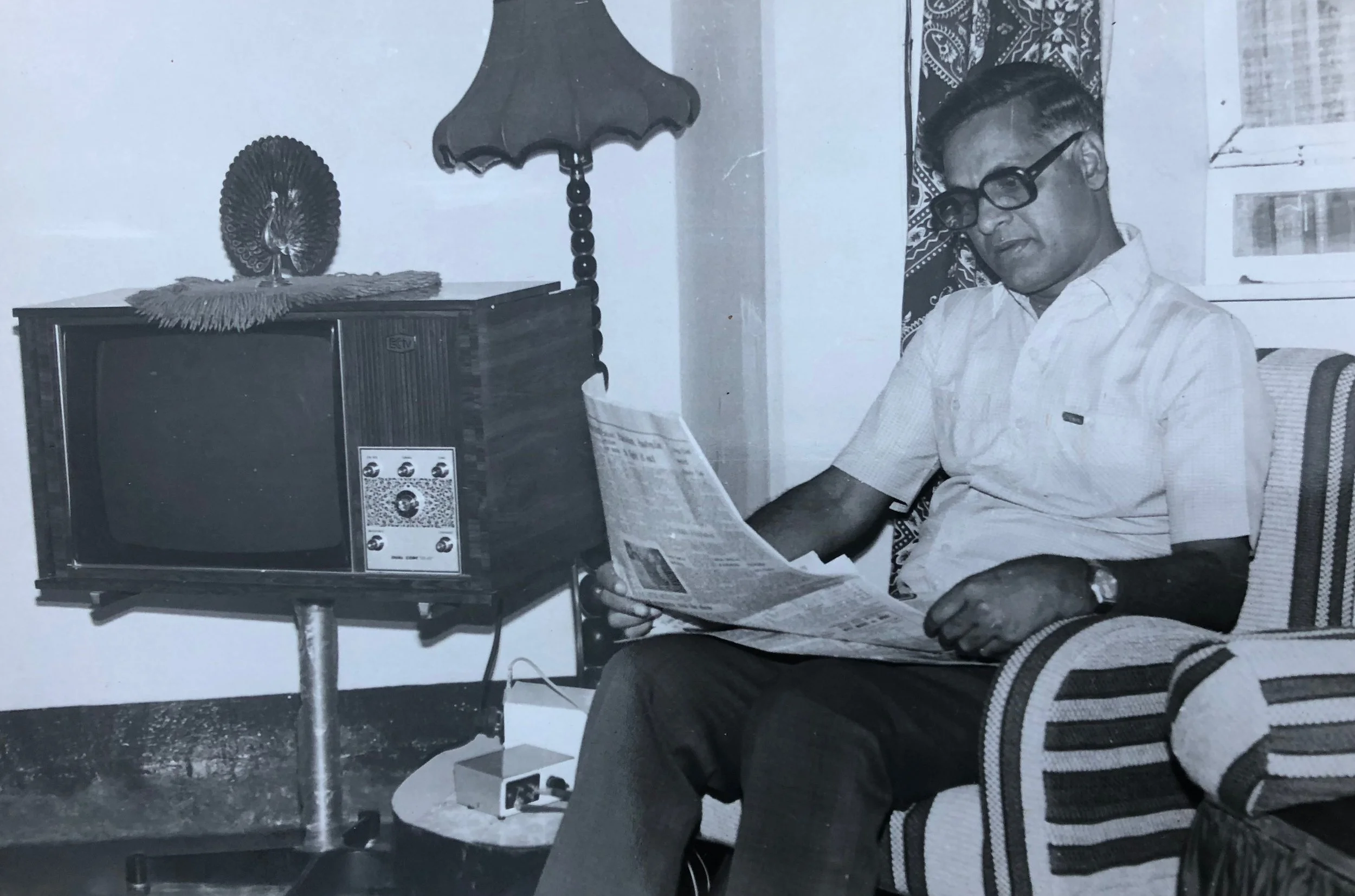
I loved watching my father twirl his hair as he lounged on the divan in our Calcutta flat, singing along to Edelweiss playing on the Grundig record player he had brought back from his trips to Germany. Over time our record collection grew. He loved Fernando by ABBA as much as the Ramadasa Bhakthi Geethalu by M. BalamuraliKrishna or the Suprabhatam by M.S. Subbulaksmi.
Harassment
The school bus used to drop us at the main road that ended at the Waltair Railway Station. We would have to walk up the street to the top of the hill to get to the Divisional Railway Manager’s house , our home for three years. The street was quiet in the middle of the afternoon. Occasionally we heard the ring of a bicycle approaching from behind.
One day, a middle aged man rode past us, then turned back. He reached out and grabbed at us before speeding away. I think that was the last time we walked home from school.
In college my friend circle was four boys and four girls. We rode the U-special from Kashmiri Gate to South Delhi, often packed so tightly, there was standing room only. The boys would stand around us girls.
Sometimes I rode alone and would feel the lingering weight of a strangers body against mine long after the bus had straightened from the swerve. Sometime I would stick a pencil into their thighs.
Once I was traveling alone on a train, sleeping on the top berth. A couple occupied the lower berths of the compartment. In the middle of the night, I felt a stranger’s hand creep up my arm from across the berth.
I screamed. The lights came on. The conductor came and took the man away. I sang myself to sleep, tears streaming down my face, singing as loudly as I could, as if to drown out everything else. Yet no one heard me but myself.
Gharshana
Amala visited us with her father , “Captain Mukherjee”, when she was a young teenager and we were living in Vishakhapatnam. We leaned over the balcony looking out at the ocean in silence as we ate biscuits while our fathers talked.
Our fathers had been classmates. She trained in Bharatanatyam; I trained in Carnatic music.
Later, I watched one of her Telugu films, Gharshana, and barely recognized her. Then the song began. The very first phrase caught my ear. I knew it instantly. it was the opening phrase of the Varnam in Mohana Ragam. But from that familiar doorway, the music veered somewhere unexpected: it blossomed into a romantic film song, carrying an emotion and expression I had never imagined in that context.
I was tickled. Amala had gone from Kalakshetra to “Gharshana” and Lord Srinivasa was not the object of longing in “Ninnu Kori”.
Somewhere along the way, the embarrassment of childhood made way for curiosity. Maybe Carnatic music wasn’t so uncool after all.
The Space between Feeling and Understanding
Have you ever broken someone’s heart?
We held hands in the computer lab, discussed Feynman and Gödel Escher Bach over samosa and chai, we took the long way home so we could read Hesse’s Siddharta on the roadside and eat “faalsey” to ward off the heat. I thought it was about friendship. He did give me a red rose and a birthday card that read “Like a bridge over troubled waters…. “
My friends said I was leading him on. Maybe I was , maybe I was lost in the space between feeling and understanding. Years later, I realized some feelings are easier to understand through music than through words.
Gurus
We’d return from school hot, hungry and exhausted from the walk home. We ate lunch and looked forward to long naps , cut short twice a week , when Amma woke us up to get ready for music class at 3 pm.
There were no printed notations, tape recorders, or voice memo apps in the early years of my musical education. We relied on our ears and notebooks, scribbling down lyrics we only half understood like Sudha Madhura Vag Vilasini, Hari Hara Sudane Ayyappa… when Vijayalakshmi Maami our Guru in Visakhapatnam taught us. I found myself relearning her songs from YouTube or Spotify years later.
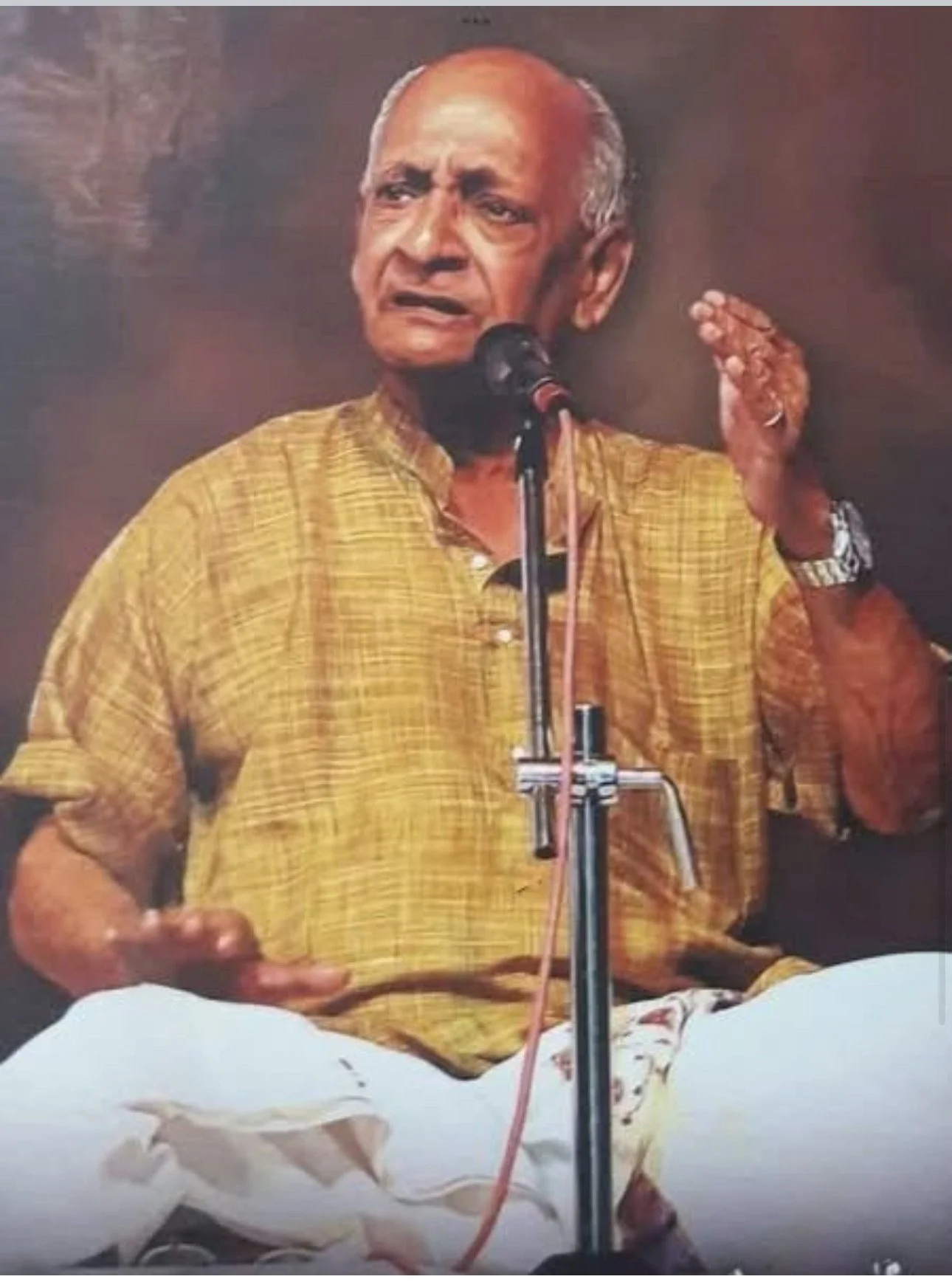
My father’s next posting took us to Vijayawada and there was where I attended my first Carnatic Kutcheri. It was by K.J. Yesudas. I vaguely recall Aunties around me murmuring about a Christian sitting cross legged and singing sublimely.
All I know is a few days later an elderly gentleman was sitting in our living room while Amma served him filter coffee. He asks me to sing and then agreed to become my teacher.
Pemmaraju Surya Rao Garu, was methodical. In contrast to my previous teachers, every lesson came with carefully prepared notation, every sangathi meticulously written down.
“Moodu commalu ante, aakaaram anta sepu paadalani ardham”, he would gently correct me to hold the note for 3 beats for the 3 commas in the notation. With the patience of a favorite uncle, he guided me through each phrase until it stayed with me. It was his lessons that I would carry with confidence for years to come.
Learning by ear is a skill I am still honing. I’ve come to realize that I naturally gravitate toward the technical side of music. Perhaps because of my engineering training, or perhaps because I wasn’t always fully awake during those mid-afternoon, hot and humid music lessons!
When it Rains it Blesses
The night before our wedding , we broke one of the universal rules , we met in secret!
I arrived in a green-and-blue Kanjeevaram saree, equal parts excited and terrified. Sheepishly, I let him hold my hand while he asked the most obvious question in the world:
“Are you nervous?”
Of course I was. Instead I reminded him in the most reprimanding tone I could muster up, of the bad luck we were inviting and of the scandal our stolen moment could stir. Neither he nor my cousin, the orchestrator of said rendezvous, looked worried by the prospect of aunts and uncles and other judging eyes bursting on to the scene.
The next morning the wedding had to be moved inside because of the rain . But the elders were pleased that the Rain Gods were blessing our union. Whether the blessings would outweigh the bad luck of a pre wedding rendezvous, only time would tell.
But here is a song we would often sing together to relive that moment.
An Opera of Our Own
Three months into America and six months into marriage, I had a terrifying thought: I had married a stranger.
I was still trying to understand why he called a pillow “mettha” instead of “thalagada”, a cold “sardi” instead of “rompa”, and said “vachindu” and “poyindu” instead of “vacchadu” and “velladu” , why he mixed all the side dishes into his rice at one time , instead of savoring each dish on its own , why he was fastidious about keeping his nails clean and didn’t like me sharing his plate of food.
I couldn’t comprehend how someone could dislike idli, dosa, and vada, never listen to Hindi music, or like football more than cricket.
Driving down the ‘Turnpike’ I’d marvel at the precision of highway exits and the confounding geometry of jug handle turns , and why cars needed cup holders and heaters , all while trying to shake the sensation of having ear plugs in my ears.
I was puzzled that people could be allergic to flowers and dust, but not to the eerie silence of houses, grocery stores, and streets.
I swallowed the quiet frustration of cooking Indian food on electric coils and scrubbing mildew off subway tiles.
I worried that the hardwood floors and wooden walls carried the sounds of our secrets and our fights .
When the spell checker marked so many errors in my writing, I doubted my abilities.
I was mastering the calculus of belonging. Fahrenheit to Celsius, dollars to rupees, miles to meters, while homesickness stayed quietly in the margins. I swapped prints for solids, sandals for sneakers, parathas for pizza, and pickle for Parmesan until I almost didn’t recognize myself. I learned to relax my tongue and teeth so I could let the Ws sound less like Vs and let the Rs roll and stop wringing the air out of every word.
Then, out of the darkness, came those haunting words:
“Let your mind start a journey through a strange new world…
Leave all thoughts of the life you knew before…”
The theater dissolved.
As The Music of the Night swelled through the hall, I felt something I couldn’t yet name, a mixture of homesickness and fear, and wonder and possibility.
Whenever I hear those opening notes, I’m transported back to that evening, to the black satin dress scattered with red roses, the red velvet seat, and the curtain rising on The Phantom of the Opera and on the overture of my life.
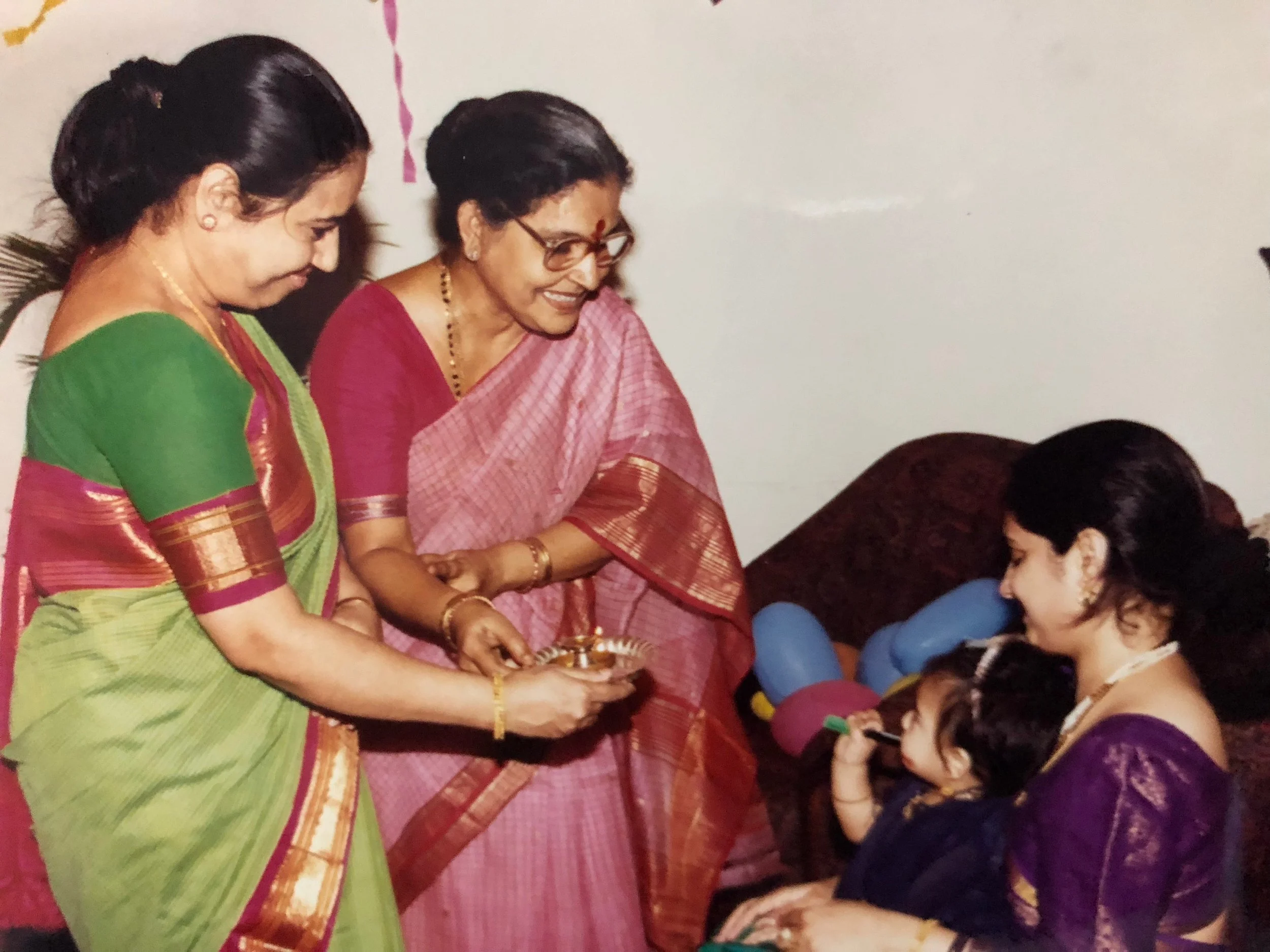
Amma & Mummy
I was delighted to discover that my mother-in-law also loved music. She never had formal classical training, but she had a natural instinct for expression.
She would create her own lyrics to movie songs, turning familiar melodies into personal stories. She wrote lullabies for her grandchildren and one anniversary when they were visiting us in Chicago, she surprised us with a song she had written on the back of a napkin! “Tu, Tu, Tu, Ta, Ra, Ra, Tu, Tu, Tu, Ta ,Ra, Ra, Suhasu , Supriya Pellanta, Rara !” It was simple, spontaneous, and touching.
Amma and Mummy ( a name I chose to distinguish the two mothers ) both adored Bhanumathi and loved singing the same songs, deriving equal joy despite their differing journeys.
Now, whenever I sing this song to her, there is a flicker of recognition in her face. She does not recognize me, but I am convinced she knows the song.
Dreams for the Future.
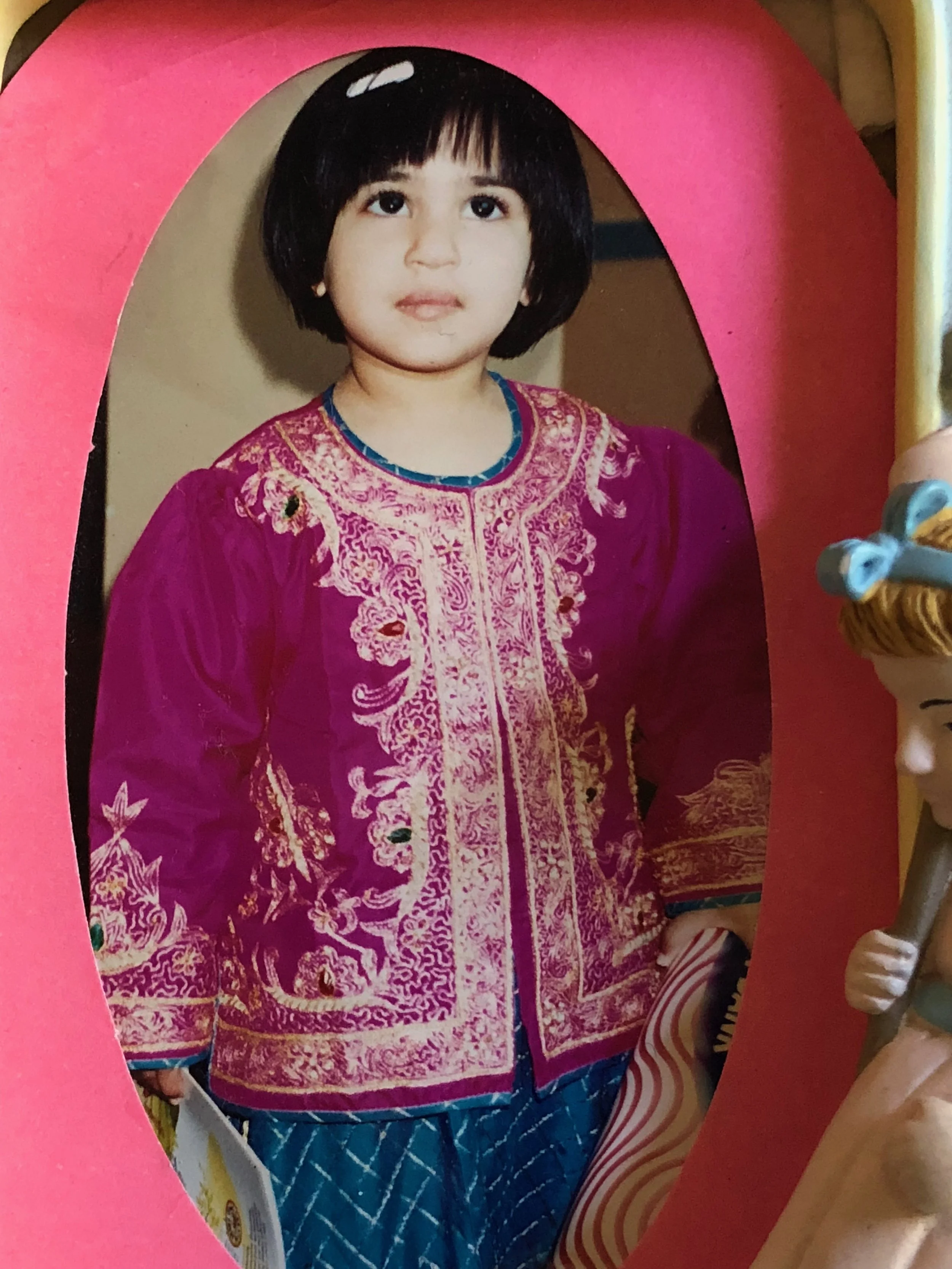
“She’s going to be the Senator from New Jersey one day,” he declared with the pride reserved for new fathers.
When our first child came home from the hospital, my husband took her in his left arm, swept everything off the dining table with his right hand, and set her down , determined to change her diaper.
My mother and sister looked on in horror.
Meanwhile, completely unfazed, he firmly swiped her bottom and fastened the diaper onto her squirming body.
He would rock her to sleep on shoulders broader than mine, sing ‘Tu Hai Meri Sruthi ‘, drive her around the neighborhood when nothing else worked, and make grand predictions about her future.
Our daughter is working on her father’s dreams . The senate is waiting.
Beyond Bhakthi
“I cannot channel Bhakti every waking hour of my life!” my nephew said, half frustrated, half amused. He got up from the sofa and went into the kitchen to get some water while his mother , my cousin sat with a disapproving look on her face. We were having a post lunch jam session.
My cousin’s boys had grown up learning Carnatic music with discipline and devotion. They were so accomplished, they were invited to perform at Margazhi sabhas.
But in that teenage outburst was something deeply honest. When I am in the mood for romantic, aching classical expression, I too drift toward Hindustani music, especially toward the softness of a thumri, like this one, where longing finds a release in Raag Chayanat or the Manna Dey gem in Raag Bagesri “Kaun Aaya Mere Man Ke Dware” that my sister Jaya used to sing in her sweet voice.
Running on a Prayer
“If I have to come to your house for dinner, I am definitely running my way there!” my brother-in-law would joke.
Back then, I cooked meals that were unapologetically calorie-heavy. And having people over for a meal was the perfect excuse to make my favorite foods. Pooris, Vadas, Pakoras, anything that held its shape in hot oil!
My sister and her husband were only a few years younger than me, yet they carried a quiet discipline that inspired me. No matter how busy or tired they were, they never missed a run, or their Saturday morning temple visit for Suprabhatam.
When they moved back to India, we decided to continue the rhythm. For an entire year, Sunday evenings became sacred, spent at the Balaji Temple, listening to the Vishnu Sahasranamam, taking comfort in the simplicity and cadence of its three note chant.
“SECOND MOVEMENT”
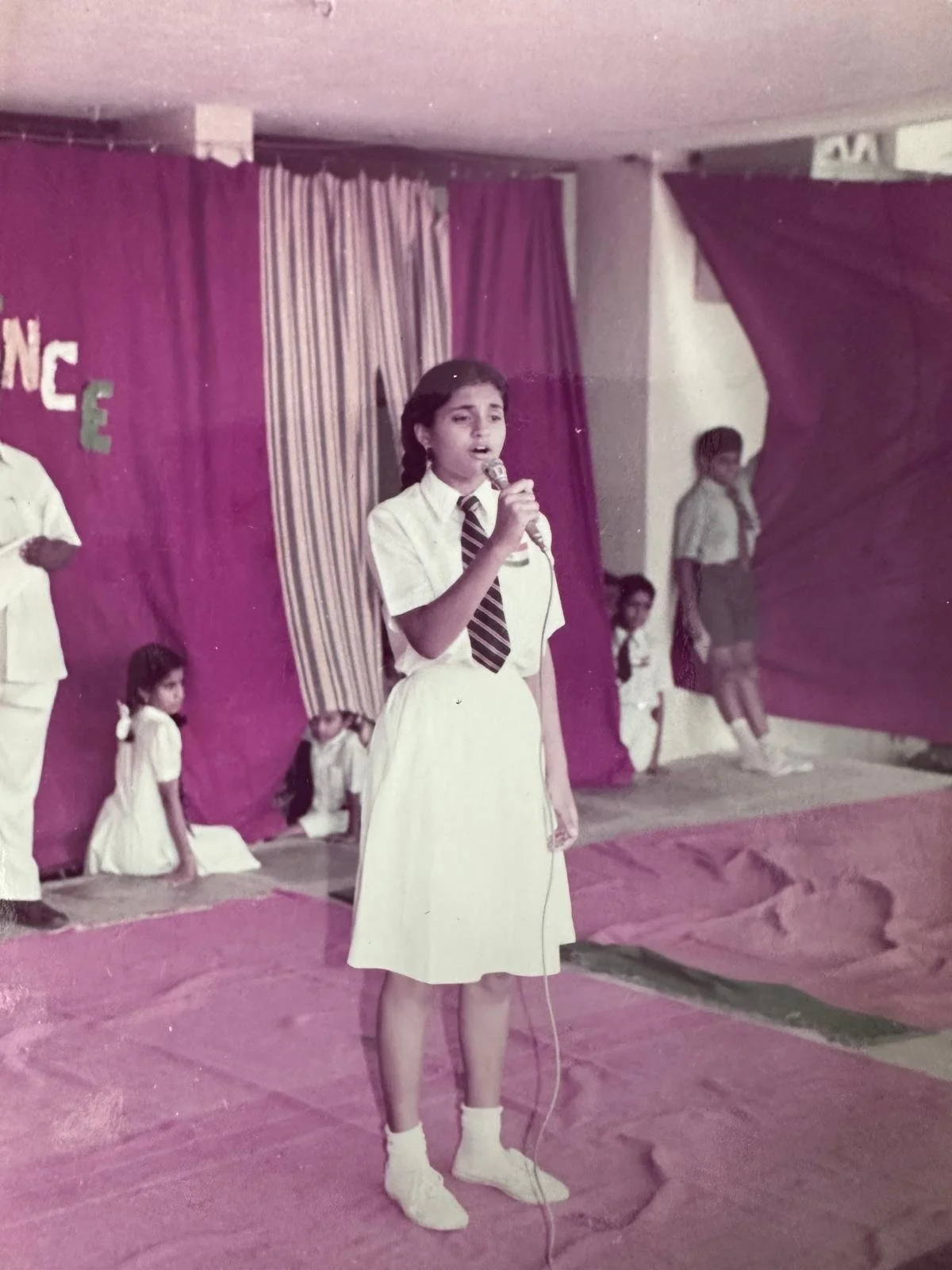
I took it as an invitation, when there was a brief pause in the variety show and the makeshift dais stood empty. I marched up and started singing “I Have a Dream.”
Looking back, it may have been the first indication that performing in front of an audience felt perfectly natural to me. Judging by the indulgent applause that followed, I had at least a little talent and absolutely no stage fright. I was four years old.
Saturday nights at the Railway Officers Club revolved around variety shows, English films, and adults engrossed in bridge or rummy.
Sunday mornings we would watch I Love Lucy and Star Trek and spend afternoons with The Famous Five or The Hardy Boys , Nancy Drew and Perry Mason.
It wasn’t the Music
My mother tipped her head down and glared at me and my sister , a signal to sing and silence the chatter . The Bommala koluvu guests had been greeted with Haldi Kumkum, and I had passed the flowers . Pulihaara and laddoos were promptly polished off the plates . That year my cousin brother sat in on my nervous singing during Navaratri and teased me for days about the lyrics of the song.
Vaga Vagaga champaru kada, mee paatala tho!”
The adults heard devotion. My cousin heard something to make fun of. I didn’t understand the lyrics at all, only his laughter, and I sat cross legged somewhere in between, wanting to flee and never sing publicly again.
My sister being older, and shyer, turned her attention to her science homework. She didn’t seem to mind never having to sing again.
Years later I listened to the song and I no longer heard the teasing. I saw my Amma’s loving countenance.
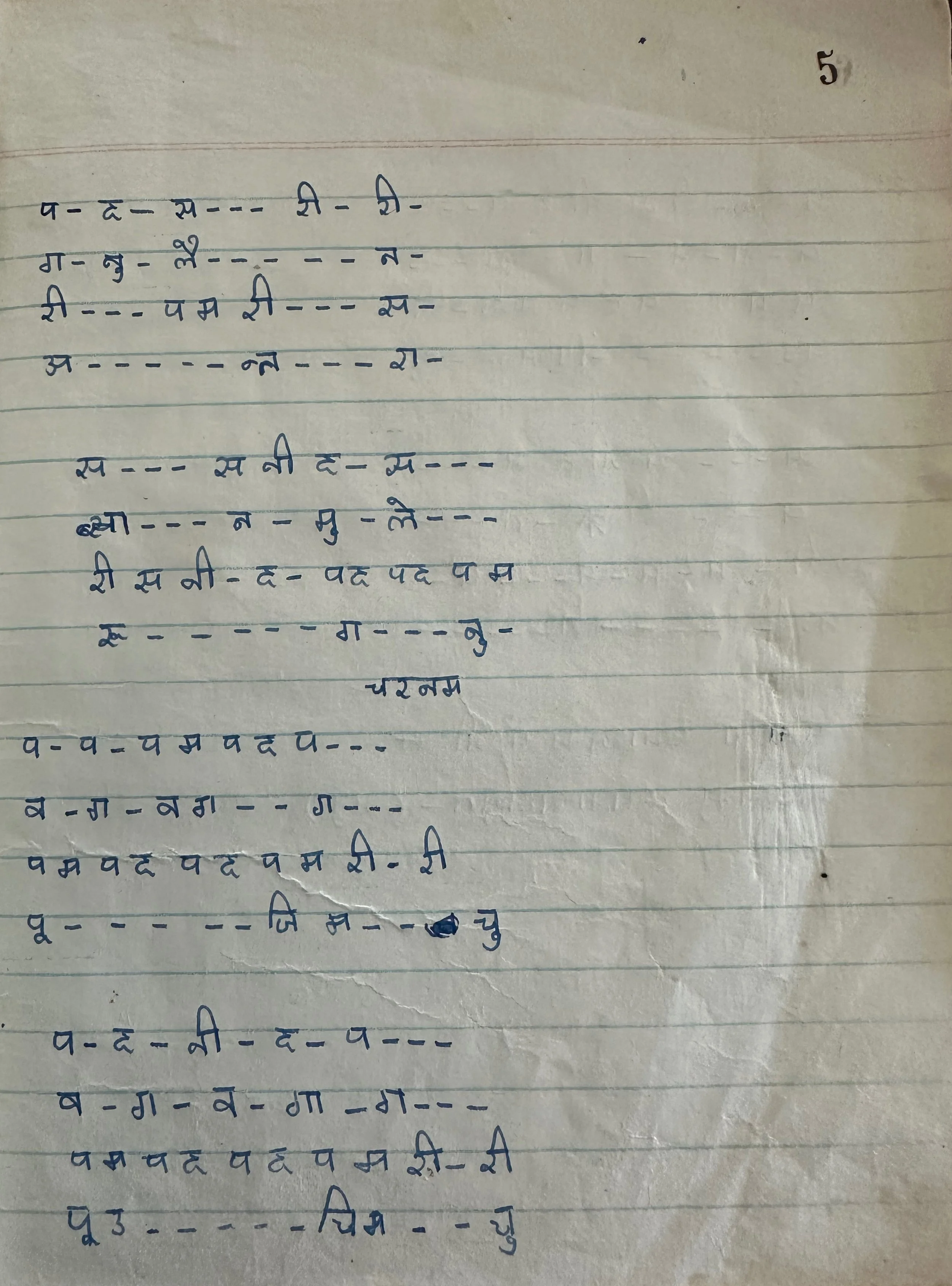
Mother of Mine
Every morning at school, we began assembly with the words, “Our Father in Heaven, holy be thy name.” To me, it felt no different from chanting “Shuklam Bharadharam” at home. Another prayer, another comforting way to begin the day.
“Pants koncham pottiga levu ?”, Amma observed as we tried the “pedal pushers” on. “Sare Kani!”, she said approving my choice but cutting my argument short, in keeping with the length of the pants I wanted to wear.
“Why don’t you wear the gold hoops I bought you? Why do you waste money?” , she would ask of my footpath finds, giant oxidized silver jhumkas that would eventually split my ear lobe or the chunky kadas I wore with my Khadi Kurtas. I think she secretly liked how I dressed!
Thirty years later, I found myself carving diyas into pumpkins for Halloween and trimming our Christmas tree with Indian trinkets. As the kids left cookies and milk out for St. Nick, I often thought about my deeply devout Hindu mother.
How was it that she had chosen to send us to schools with names like St. Thomas and St. Theresa? Or defended us with quiet ferocity when a conservative uncle questioned why we wore salwar-kameezes instead of langa-vonis?
Who’s the Boss
“I hate rock music!”, I declared with the certainty of the uninitiated. It was around 1988 or 1989. My friends were quick to challenge both my musical taste and knowledge.
For my birthday, Manish and Vikram gave me a gag gift: a cassette that was labeled “The Boss.” That was how I heard Bruce Springsteen for the first time.
Life scattered us in different directions, and I lost touch with Manish. I knew he had come to the United States to study, but decades later I smiled when I learned he had entered Indian politics. He had spent a while dancing in the dark before carrying forward his family’s political legacy.
Every now and then, when this song comes on, I am reminded of that birthday gift and how despite our detours, the pull of tradition can be stronger than we can ever imagine. I wonder what Manish listens to these days.
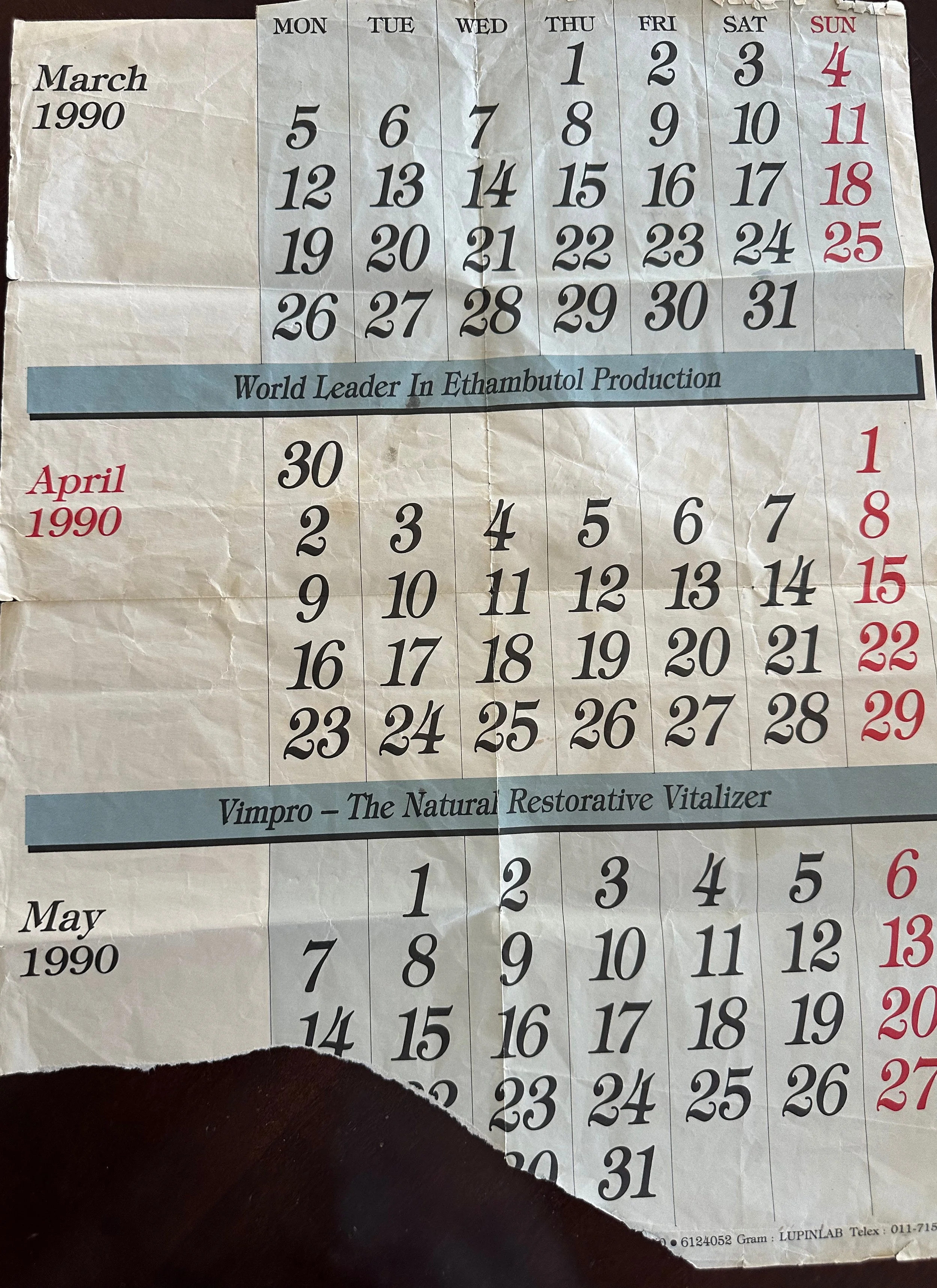
Just Married
I stared blankly at the back of a calendar page dated March, 1990, the month and year I got married. Then I looked at his most prized possession, his stereo system . I sat on the blue couch, dwarfed by the two tall wooden Bose speakers that stood like sentries on either side of the television and unsure how to turn a hastily scribbled list of ingredients into a meal.
He was coming home for lunch so I wouldn’t be alone all day, but I had no idea where to begin. Relying on memories of watching Amma cook, I made some pappu and a gooey looking mess of Bhindi .
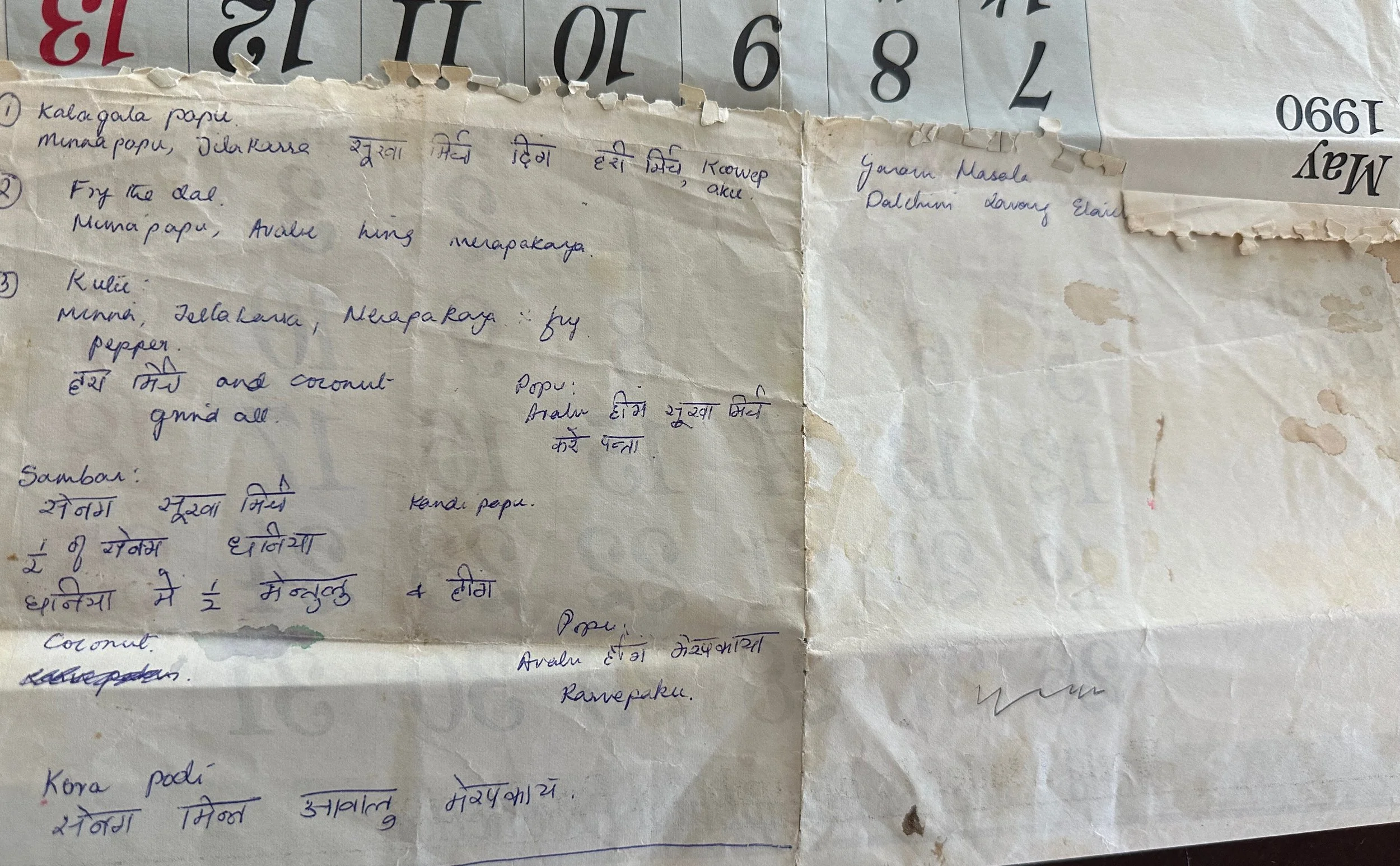
Whats's for Lunch
He popped a CD into the player , filling our apartment with music and we ate in silence. At the end of the meal he smiled and said, “Not bad Supriya ! For someone who has never cooked a day in her life!”
It would take a few years before those early attempts transformed into skills that eventually earned me the moniker Supriya “Chole” Rao.
Thursday nights had their own rhythm. We settled in for NBC’s prime-time lineup, The Cosby Show, Family Ties, Cheers, and Night Court. Small rituals that slowly transformed a foreign country into our home
Grace in Chaos
My heart raced. My stomach lurched in shock. I couldn’t breathe. I was dumbstruck. I started pushing past the people, eyes searing between their legs. On our way out of the temple crowds at Tirumala Venkateswara Temple, we were suddenly swept into what became a stampede-like surge of people and in an instant my eight year old son was gone from sight.
We had planned a trip to Tirupathi with my parents-in-law. We drove from Bangalore to Tirupathi, kids and elders in tow, anticipation, laughter, exhaustion all packed into one journey. My father had arranged VIP darshan for us, so instead of waiting in a line with a lakh of other people, we would wait in a thousand person long line. It felt like planning and influence had won. But God has a way of rewriting plans.
Then I heard my father-in-law’s voice cut through the noise: “Dorikindu, Dorikindu, We found him! It is all okay Amma !” And with that, the world steadied.
I’m on the Top of the World
If you grew up in the ’70s, how many audio cassettes did you own? I could count mine on one hand.
My parents would rarely allow a cassette purchase for fear of the corrupting influence of such luxuries. On the other hand I got to take free swim lessons from the first Indian woman to ever swim the English Channel.
That didn’t stop me from collecting music. “ I love Asha so much! Can you make me a tape of the second volume of her greatest hits too! “, I implored my friend.
All I treasured were those audio cassettes, llayarja hits , the Best of Boney M, that I’d listen to on repeat .
We’d eagerly look forward for Binaca Geet Mala or the late night Vividh Bharathi program to hear music . All India Radio played Western music we rebelliously listened to behind closed doors, while we read Mills and Boon romance novels wrapped in newspaper should the doors fling open to our transgressions.
The Language of Ragas
When an aunty once asked me what my favorite raga was, I froze for a moment. It felt like being asked to choose a favourite sense organ.
How do you pick one, when each has its own way of knowing the world? Because in classical music, there is a raga for every hill and valley of your emotional landscape.
Like the soft intimate romance of Tere Mere Sapne in Raag Gara or
Like the rejoicing refrain of Raghuvamsa Sudha in Kadana Kuthoohalam ragam as our daughter Sruthi was carried into the pelli mandapam during the Telugu wedding, a ceremony held in our backyard and constrained by social distancing.
Also the Subha Pantuvarali that simply sat with my pangs of sorrow until they softened.
And perhaps that is why Kapi has always felt like a companion, its many shades reflecting the color of my moods.
It would take more of life to unravel before I understood…that a raga isn’t a preference.
They say a picture is worth a thousand words. I’d say a raga can be infinitely more articulate.
Dead Man Walking
“Dead Man Walking ?!” Who spends their wedding anniversary watching something that morose! I bemoaned . But that’s what was playing at a time convenient enough for us to get away for a few hours and an affordable babysitter to watch our nine month old . Five years into our marriage, the glamour of broadway made way for starker realities like raising children and grinding through our jobs and apparently, men on death row . What I remember is Bruce Springsteen’s deep and somber voice on the title track and how desperate I was to get home to my baby and sing her to sleep.
RAOKS
“Can I go first, Mommy? Please!, please?”
We had finished reading for the night. Was it Pete’s a Pizza, Rumble in the Jungle, or Alexander and the Terrible, Horrible, No Good, Very Bad Day? I can’t quite remember.
But I do remember this: the urgency in their voices to be first to share their random act of kindness for the day.
I called them our RAOKs—short for our last name, and for something I hoped would stay with them.
Soon bedtime rituals were replaced with wakeful nights and adolescent angst and I would wait up late for my daughter to run across the aisle from her room to ours and jump into our bed to empty the day’s happenings onto the parental unit as she would sometimes refer to us.
Vulnerability
Sometimes, passing his room, I could hear him singing to himself, if I pressed my ear to the door.
A voice I rarely heard anymore.
“Naaku aa Trignometry yedho theliyadandi, kaasta meeru pillala doubts clear chestaara?”, I overheard Amma after dinner, asking our father to help us with our math homework.
Next morning, she woke us up earlier than usual so that we could be ready with our books and questions and get some time with him before he took his morning ”Position” call, at 6:00 am as Divisional Railway Manager.
“You are coming to me with question number four of twelve?!”, he would admonish. “Go revise your fundamentals before you come to me!” That was the end of that.
Every festival, he sat down for the family puja, more out of duty than devotion. The rituals were often interrupted by ringing phones and urgent work, followed by my mother’s predictable scolding. His first loyalty was always to the Railways. Everything else was “chadastam”, a Telugu word for unnecessary fuss and ritual. I took this to mean he was not religious.
As my mother’s health declined, I began to notice something different. For most of my life, I thought faith belonged to my mother. It took me much longer to recognize it in my father.
UNSUNG HEROES
The lead violin in a string quartet. The barely perceptible ingredient in a dish. The puppets in front of the screen. Every craft has its stars.
With age, I’ve started noticing the background, the things that lie beneath and behind.
When my daughter joined the school orchestra , I tried to convince her to play the violin but she chose the viola as the instrument of her choice. That made me listen differently. I began to hear how the viola filled the spaces beneath the melody and how unsupported the music sounded without it.
A few methi seeds sputter in hot oil as I make the tadka for the kadhi. Easy to miss, even easy to resent if you bite into one. But those little seeds make the kadhi sing!
When my husband started to travel Monday through Friday for his consulting career, I counted time in dry cleaning cycles. Yet he never failed to check in every night. Sometimes he drove a hundred miles to work, then returned to bathe the kids and tuck them into bed. And somehow, I never had to worry about the lights being turned off, or the bills being paid, or the glass of water on my nightstand.
The tambura’s sruthi was the quiet anchor I listened for, so I could bring home the manodharma. And as I concluded I couldn’t help thinking about all the things we barely notice.
Guru Sampradaya
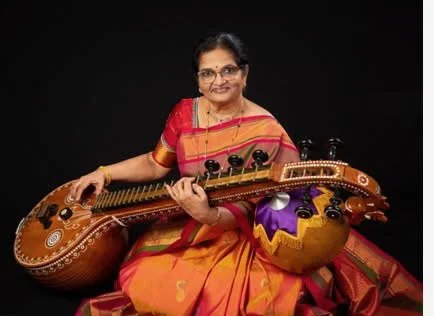
“Hmm… Padu!” Rajeshwari Aunty asked me to sing, in her characteristic assertive tone.
I had been invited to a gathering because of my interest in music. After I finished singing, her first question was, “Ekkada nerchukunnavu? Vijayawadalo na?” When I nodded, she told me she could recognize the “sampradaya”, the musical tradition I came from, by the way I rendered the “gamakas” in the kriti. Her father Ayyagari Someshwara Rao Garu, my Guru Pemmaraju Surya Rao Garu and Mangalam Balamurali Krishna Garu were all contemporaries who taught at the Vijayawada Music College under the leadership of Nedunuri Krishanmurthy Garu.
And that is how she became my last guru.
But more than music, she taught me what it means to pursue something you love with complete commitment.
Once, I told her I couldn’t attend class because I had hurt my foot. She replied, “Gonthuku bane undi kada? Class ki ravacchu kada!” “Your voice is fine, right? Come to class!”
I was stunned. And completely won over.
She guided me as I prepared for my first Carnatic kutcheri, and gave me something far greater than musical lessons, the courage to show up for something I loved.
Here she is , on the Veena playing Nagumomu in Ragam Abheri.
Till There was You
Becoming an empty nester is one of those transitions everyone talks about, but no one can quite prepare you for.
Even though I had a career I enjoyed and a life full of things I cared about, when both my children left home, I felt a void. I woke up wondering: would there ever be another endeavor as meaningful and transformative?
To which my husband would tease, “Yes. Me!”
Raising my children had been my biggest and hairiest goal, my longest-running project, and my greatest accomplishment.
For my first birthday after my son Bharat left for college, he sent me this recording. And even though the children have been busy adulting for over a decade now, whenever I miss them, which is often, I listen to it.
And for a few precious minutes, I feel their uncomplicated hugs again.
Stress Relief
The train pulled out of Howrah Station, and I sat by the window, unable to explain the sadness I felt at leaving Calcutta behind. I stretched my hands out of the window, looked at the passing fields, and started to sing. Somehow the ache dissolved into the wind along with my voice.
In college I discovered I had a talent , I could whistle , entire songs, even classical ones. I resorted to whistling when I needed to let out some steam and when singing was not an option. Nobody seemed to mind until they realized it was a girl who was whistling.
Years later, when arguments filled our home and silence followed, I used the same remedy to break the silence.
At my home office, in between stressful meetings, I sang my way through tricky sangathis and that satisfaction powered me through the rest of the day.
“MAIN MOVEMENT”
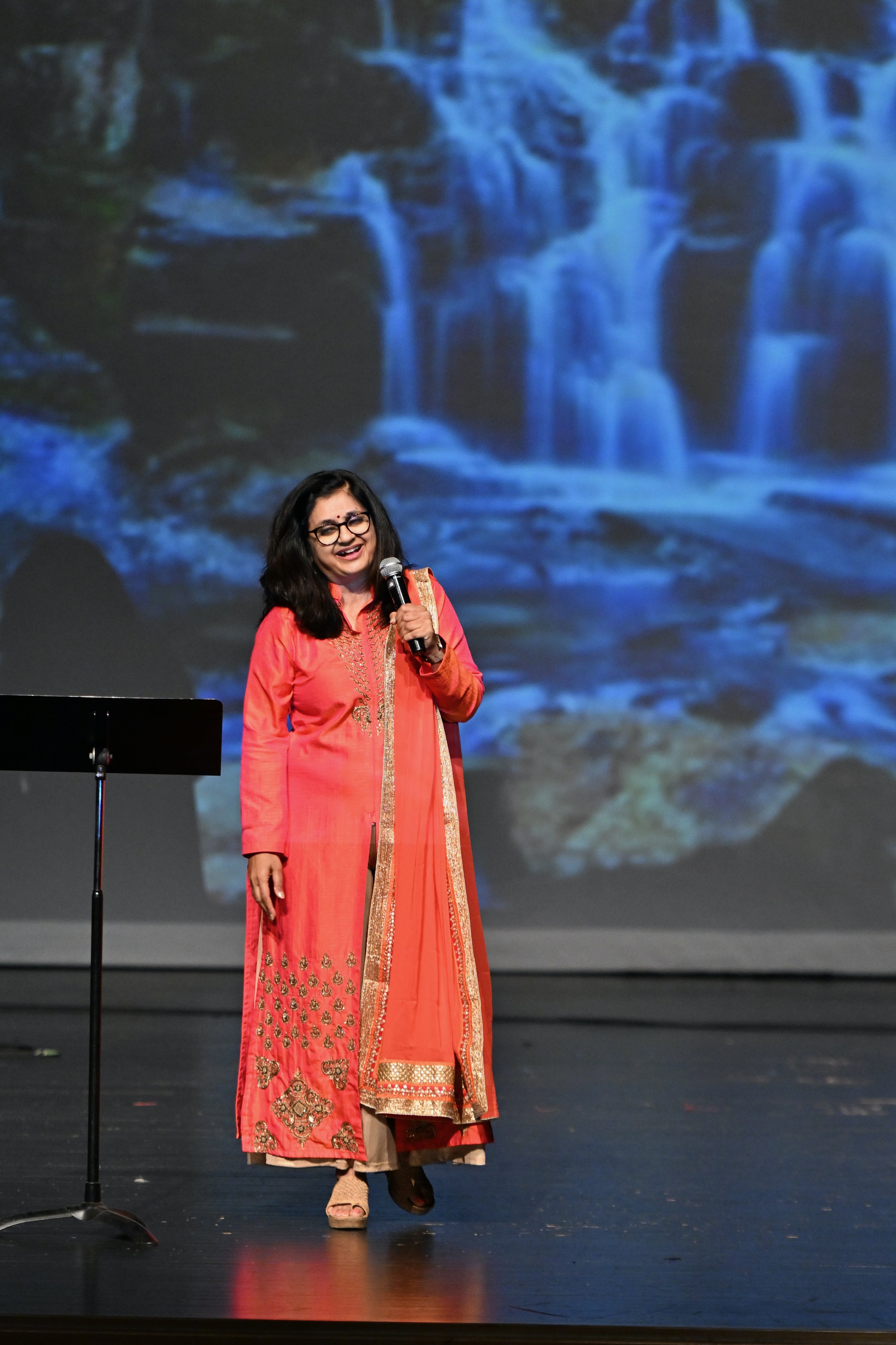
The Girl with the Golden Earring
One year, provoked by the monsoon, the muddy waters of the Hooghly broke past the bank and the narrow park and flooded the street in front of our building, numbered 18/1. We ran down the stairs , sitting on the first dry steps , making paper boats and racing them in the puddles outside . When I came home I was missing a gold earring . Tearful and angry at the fuss my mother kicked up , I flung my Hawaii chappal against the door and something shiny caught my mother’s eye and there it was , lodged in the rubbery wedges , the missing earring.
Whatever will be will be
Doris Day illuminated the screen dressed in a grey suit and black bow on her head, seated at a piano, and singing like a lark.
Meanwhile Bearers wearing once-white uniforms, served tea and sandwiches to children piled onto dusty green sofas. I worried cigarette ash into the red carpet with the toe of my Mary Janes, as the song played , “ Should I paint pictures? Should I sing songs?
Whether that’s where I first heard “Que Sera Sera,” I can’t say. What I do know is that the song stayed with me for the rest of my life. It may have shaped my outlook on life.
Listening to the lyrics now, I’m struck by how closely their message aligns with the Vedantic principles we learned at Sunday school at the Ramakrishna Mission in Belur Math.
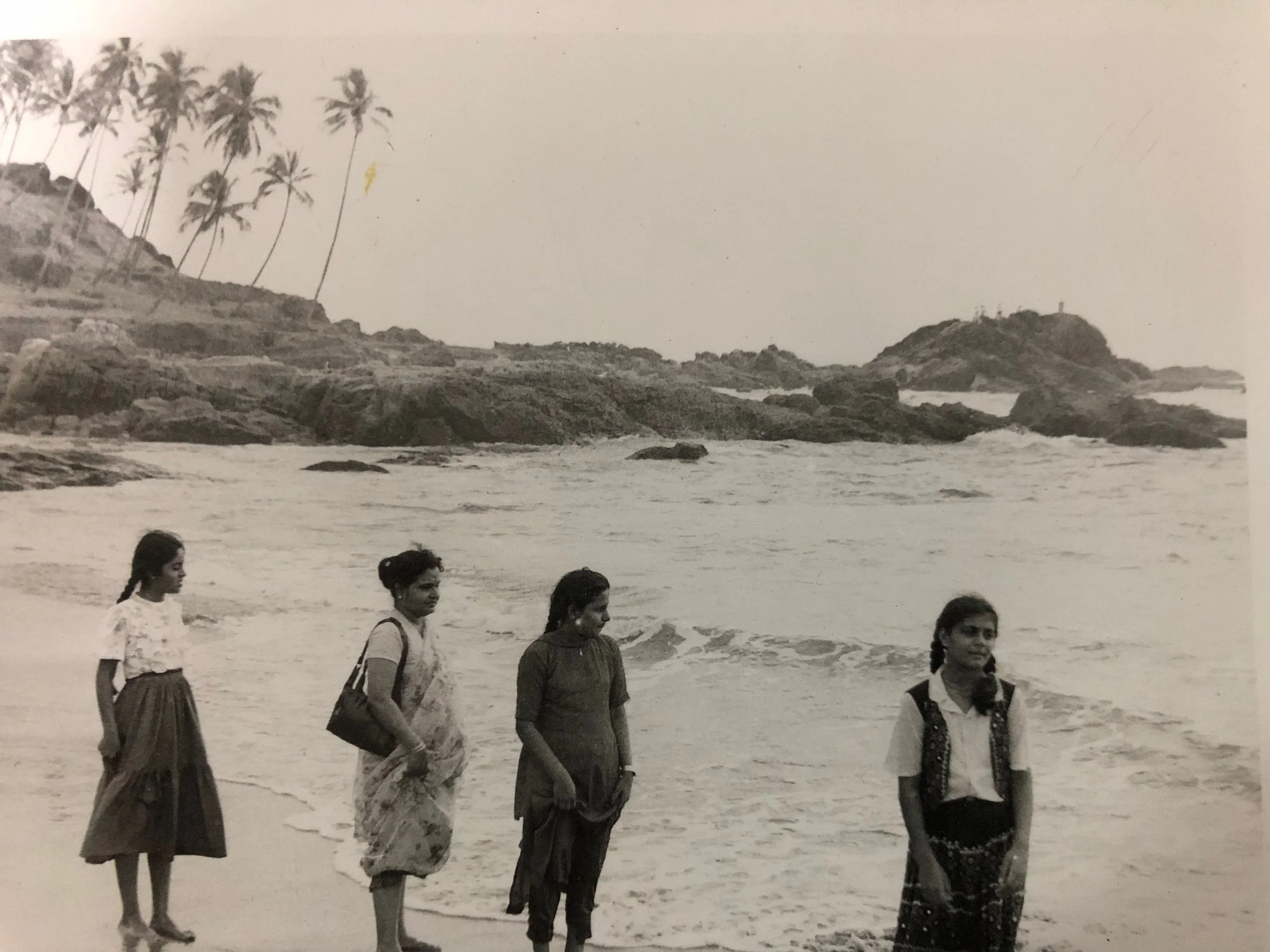
Not Either Or
Mi Foreign Munda Ekkada undi?” an aunty would affectionately ask for me, pinching my cheeks. As a child, I secretly enjoyed the compliments that came with being called “fair.” I didn’t yet understand what those words meant or what they said about the world I was growing up in.
It was only as a teenager that I began noticing how differently girls could be treated because of something as arbitrary as the color of their skin. And I began to wonder why beauty seemed to carry so much currency.
Perhaps that was when I began wanting something for myself: to be known not for how I looked, but for what I could do. To get the job because I had aced the interview. To get the singing opportunity because of my voice.
I wanted beauty and brains to coexist without one diminishing the other. More than anything, I wanted to believe that a woman’s worth lay in her strength, her creativity and her endurance, not simply in the way she looked.
Ragging
“Hey, Freshies! What’s your talent? Speak up!”
A senior who looked more like a fully grown man than a college student barked the question at us.
My friends mumbled beneath their breath. “I sing”, I said with polite defiance.
When I finished singing “Seene Mein Jalan”, there was a brief silence.
Then one of the seniors laughed and said,
“Bhai, yeh toh sach mein gaa sakti hai yaar! Chalo, chhod dete hain inhein.”
That is how the ragging ended my freshman year of college.
Constraints are a feature, not a bug of adult life.
I learned this lesson early in my professional life as an engineer and manager. I faced it again as my family’s default cook. I used to get a weird kick out of making a meal from whatever oddball mix of ingredients was left in my refrigerator and pantry, the kind of challenge that eventually became the premise of “Chopped “. It was how my mother and grandmother cooked, with leftovers and only what was in season and affordable.
I encountered constraints once again when I ventured into Manodharma, the improvisational heart of Carnatic music.
In Ragalapana, working only with the notes and grammar that define a raga, you search for your own answer to a timeless question: What is the essence of this raga? How do I make it my own?
In Neraval, you return to a single line of lyric and expand upon it, much like refining an elevator pitch, but watching out for when the lyric crosses a tala boundary. You cannot stop when the tala ends, you must continue past it to preserve the meaning.
And when you become skilled enough at this kind of elaboration, you are ready to create and perform a Pallavi—the centerpiece of a Ragam, Tanam, Pallavi, or RTP.
It struck me that an RTP is almost a rehearsal for life itself. We begin with what we’re given: our circumstances, our talents, our responsibilities, our constraints. Within those boundaries, we explore, experiment, communicate, refine—and sometimes create something that is entirely our own, like Rajma Sloppy Joes or Macaroni and Avakai.
What’s in a name?
“Peru Bagundi” , Amma said. “Nee Koduku Bharinche Vadu “, “Raminche Vadu“ , Tharinche Vadu Avutadaiyya!”
I was sitting with my swollen feet up on the ottoman , exhausted from eight months of carrying. We had barely finished turning the pages of “The Book of Hindu Names” by Menaka Gandhi, when my husband settled on the name “Bharat” for our son.
When my mother eagerly expounded on the three syllables that made up the name, I heard more than a grandmother’s blessing. I heard what she believed was the journey of three generations: one that endured, one that found joy and possibility, and one that would carry forward what came before.
But I also knew my mother lived with a contradiction. She was a fierce feminist, shaped partly by the injustice of being judged for not bearing a son. She rejected the idea that a woman’s worth depended on producing a male heir. And yet, like many of her generation, she had inherited the belief that a son carried the family name forward.
The name Bharat felt right to me. It came endorsed not only by a book , but also by a father’s choice, a grandmother’s hopes and a past pregnant with stories of its own.
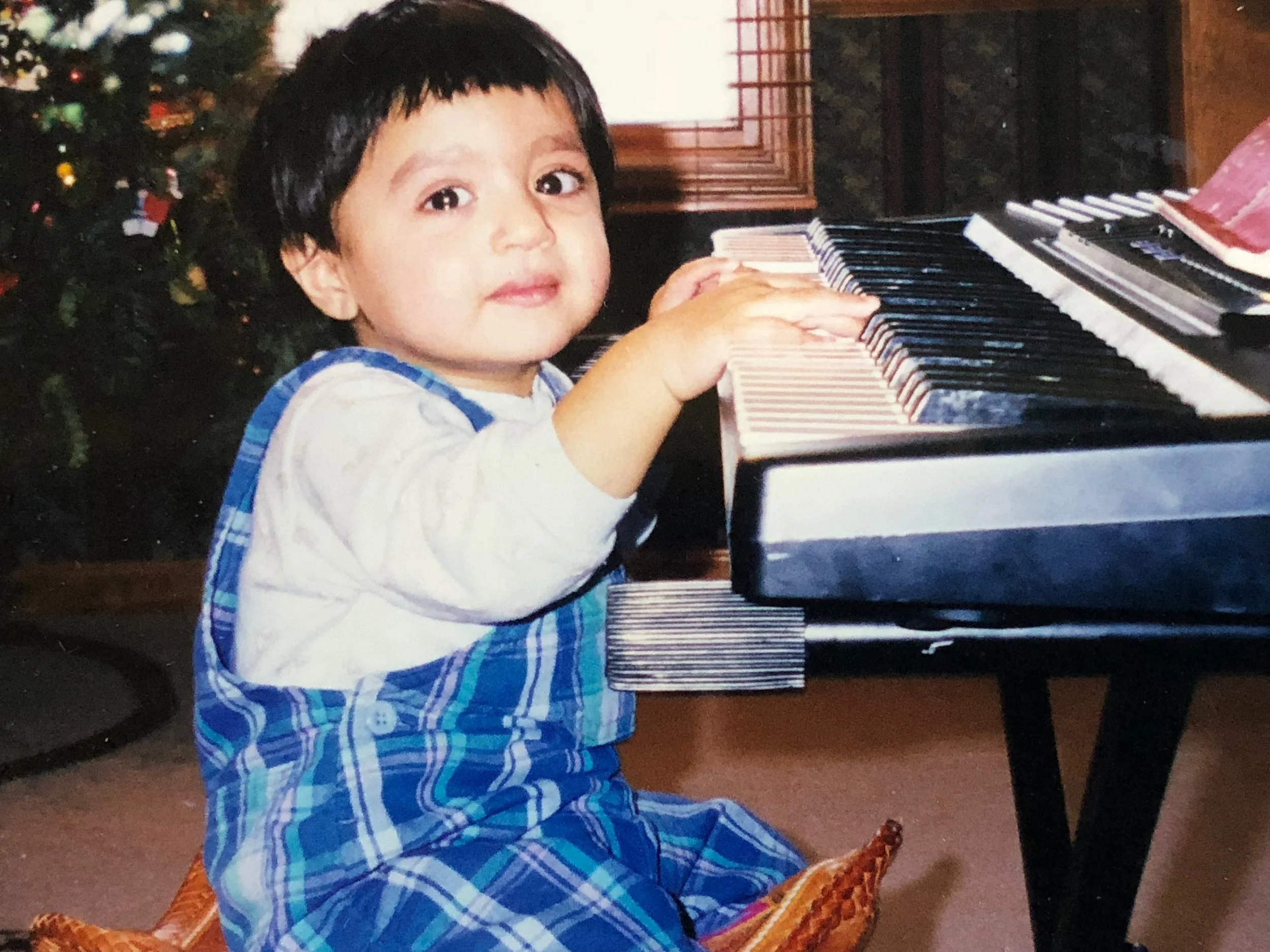
Po at the Piano
As a young boy, nothing captured my son’s interest as much as playing the piano, or the guitar.
Like any dedicated mother would, I rushed to enroll him in Carnatic Vocal lessons. A few years in, perhaps as a result of being bullied in school , he came home one day, saying “Boys don’t sing Mom!” “I am quitting.”
I was heartbroken because he had a great voice. I relented. He joined the middle school orchestra and fell in love with the Cello. Perhaps there is hope I thought.
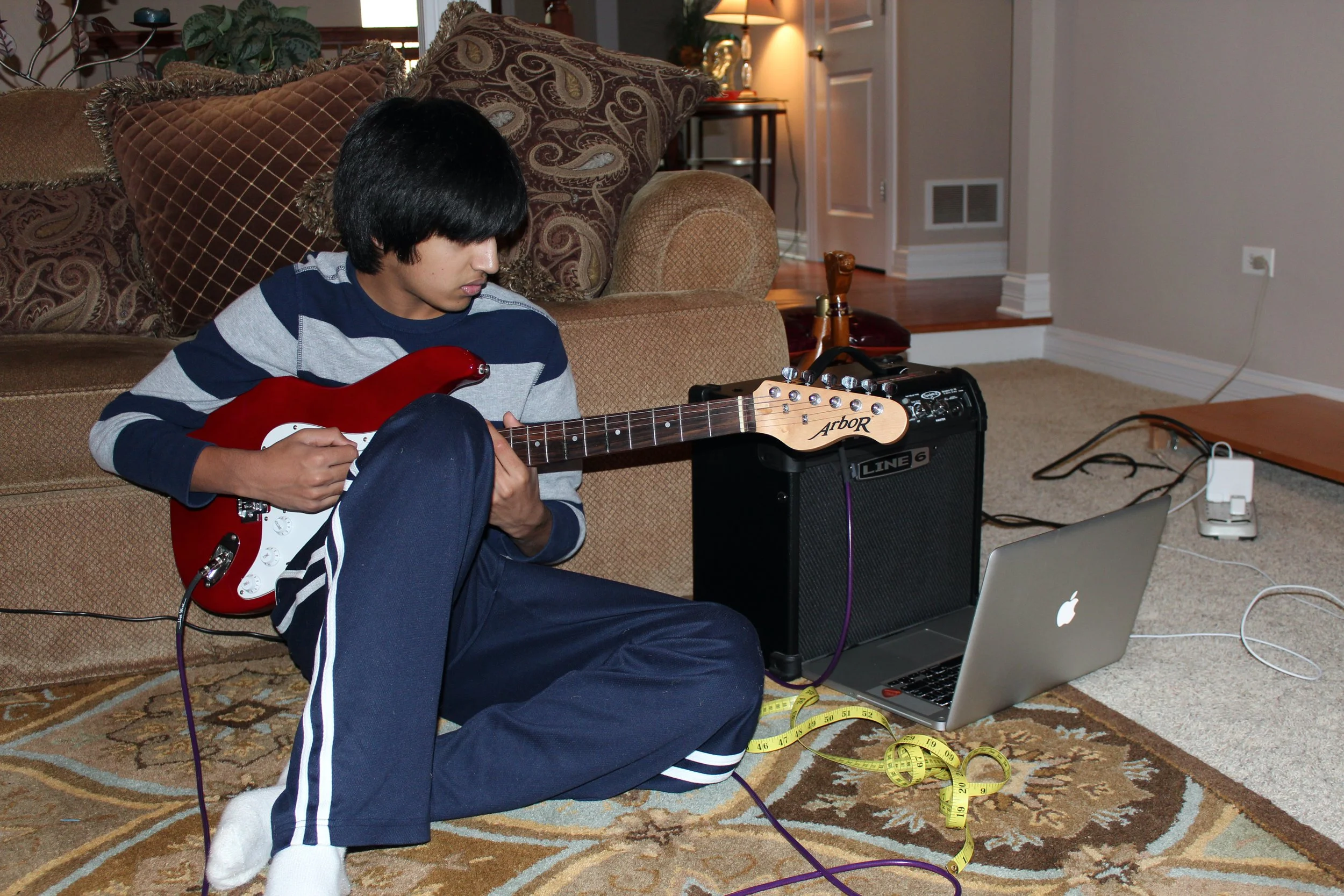
The Hunt for Harmonics
In 7th grade he couldn’t settle on a topic for his Science Fair. Then it struck me.
Why not explore the science behind music?
His enthusiasm for the project took him all the way to the State level. He discovered that the standing waves and harmonics he was learning about in science were hiding inside the music he loved.
And I rode that same wave equation he was studying down memory lane, back to the math I had learned in high school and college—and rediscovered that connection for myself.
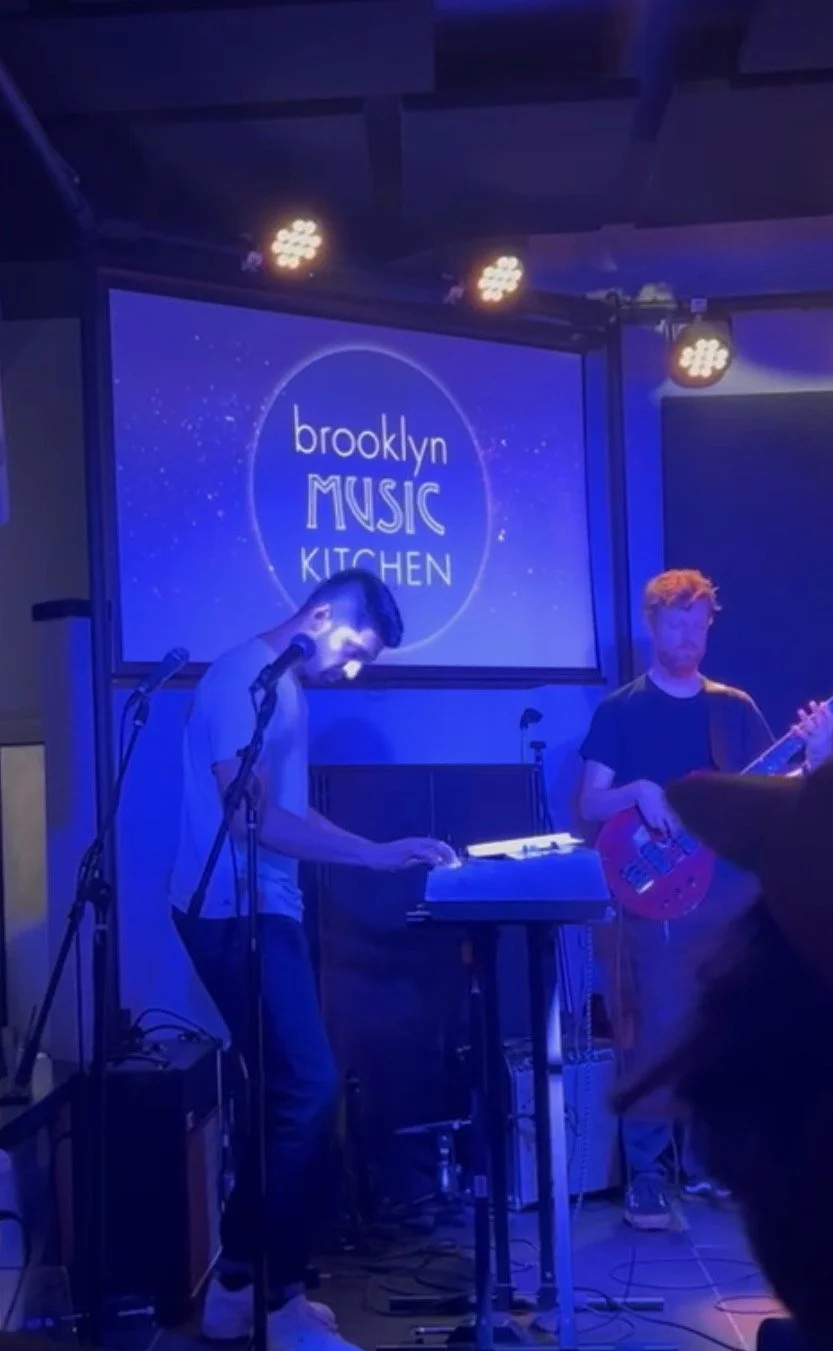
The Piano Man
Today, he continues to enjoy music and plays in a band as time permits.
Cancer and Faith
“Supi, I have some bad news.” , my sister Sudha said, almost crying. “It is not metastatic and I think her prognosis is quite good.”
That is how I heard the devastating news that Amma had breast cancer in December 1995. It was a few days before the start of the Christmas break and I was furiously coding into a computer screen in Piscataway, New Jersey.
I wanted to believe the doctor in my sister , but I was already shattered by the bolt of the big C .
She must have felt alone without her three daughters. Two abroad and her last child recently returned from her honeymoon. My father, as usual, was absorbed in his work with the Indian Railways, which Amma jokingly referred to as his “first wife.”
How she faced the surgeries and uncertainty, only she and her faith could say. This was when she turned deeply to Sri Satya Sai Baba’s teachings.
In a Bombay hospital, before chemotherapy, she sang Sai Bhajans.
Kierkegaard wrote that faith lives in paradox: we long for certainty, yet it never comes. Cancer offers no guarantees. No one can promise outcomes or predict the future. Faith is what gave my mother the strength to take the next step without seeing the road ahead.
My mother lived more than twenty years after that diagnosis.
You could call it a miracle of medicine or a leap of faith. All I know is that Sai Bhajans became part of her life and mine.
Chords
Musical Chords are a bit of a mystery to me . I will crack them, one day. But they have taught me something about people .
My mother-in-law once observed that her daughters-in-law were inverses of each other. One dressed modern but lived traditionally. The other dressed traditionally but lived more modernly.
My husband saw a contradiction when I rejected the “mangala sutram” but embraced pujas.
“Mom you are so weird! How can you like Pitbull and Chopin? That does not make any sense !”, my daughter said of my genre ping ponging.
Each of us composes a multi-dimensional identity from notes we inherit, notes we reject, and notes we discover along the way. Our upbringing, relationships, experiences, and the questions we learn to ask shape the people we become.
Others hear only the melody they can resolve from that complexity.
Sliding Doors
You know that movie Sliding Doors, where one decision creates two different lives?
Every time I hear a song from the movie Swades, I find myself wondering about the life we didn’t choose.
Soon after the Y2K software bug proved to be innocuous, our family had the chance to move back to India. We spent a weekend in Pune, Maharashtra being wooed by an IT firm. We checked out schools and houses in the promise of offshoring our American life.
For reasons that felt right at the time, we decided to remain in the U.S.
Sometimes I wonder what was waiting behind that unopened door. Would Amma have avoided the coma that snatched her from us? Would my parents-in-law have escaped dementia? Would my children have grown up speaking an Indian language and sharing my love for Carnatic music?
Or would life have unfolded much the same way?
There’s no way to know. The lives we didn’t live exist only in our imagination. All we are left with is this moment.
Pallavi
I begged her to stay until the weekend. But she insisted she had to get back home. My heart broke in that instant.
“This is your home,” I protested, only half believing it myself. She had left for college four years earlier, and in a month, my son was going to leave too.
The next morning, I stood in the kitchen staring at a donut on the counter, debating whether to eat it. With the kids gone, life had quietly carved a hole in my center, leaving me with slower mornings and too much time to notice it.
So I buried myself in work. I traveled for business and for pleasure. Flirted with hobbies. One donut became several. Before long, I not only felt like one, I was beginning to look like one too. Then I put in my AirPods and listened to the Tyagaraja krithi I was learning.
In it, Tyagaraja asks a timeless question: Does happiness lie in our attachment to possessions and loved ones, or in devotion to Rama?
What if Ramuni Sannidhi is a sacred locus of intent? A place where we direct our energy and find meaning. It could be a craft you practice like the drumming my husband recently took up. A calling you never retire from like my older sister’s, who still works as a doctor. A community you build like my younger sister who runs multiple social work organizations. Or caring for the other temple we inhabit, our physical body, as my ninety year old father does, hitting ten thousand steps everyday.
It would be up to me to turn my empty nest into a Sangeeta Sannidhi.
Swarakalpana
Hmmm… hm… NO! Komala Nishadam! Jagratta!” she shouted, and I opened my eyes. I sing best with my eyes closed. But when I got consumed by the feeling, I landed on a note that didn’t belong in the raga.
“Open your eyes and sing!” Aunty demanded. “You will make the audience fall asleep too!”
How do you balance feeling and structure—sing with emotion without making grammatical mistakes?
Then came Swarakalpana. She sang the first few swarams. I thought I had it. Then I started doing the math: how many notes in my musical budget? What permutations could I use?
I loved prime-number patterns. “Takita, taka thakita, takadhimi takita.”
She suggested simpler, even-numbered phrases. “Taka dhimi, taka dhimi.”
I tried and tried, but kept missing the ending. “I don’t think I will ever get it, Aunty.”
“What is that tapping sensation under my head?” I would practice in my head, night after night, my hand keeping tala on the pillow until it woke my husband.
The next class, I closed my eyes again—but this time, I stopped counting. I felt the rhythm and sensed when it was time to land.
Even the instrumentalist noticed. My swarams, he said, were more stream-of-consciousness. An effective musical conversation, he explained, needs to follow convention. “Otherwise the audience will be lost. “
Oh! That delicate dance between thinking and feeling. It had a knack for showing up everywhere—in music, at work, and in relationships.
A Raga , A River , A Life
If I may dare to compare the ways in which their music speaks to me, I’d say Annamayya is a little like Eminem, Tyagaraja like Taylor Swift, and Dikshitar… well, Dikshitar is more Infinite Jest, by way of David Foster Wallace.
I gravitate toward Dikshitar’s compositions the way I love sinking into a long, dense, layered novel, full of words I need a dictionary to look up, and ideas I’ll spend days afterward deconstructing.
I learned Tyagaraja Yoga Vaibhavam from a recording by Ranjani & Gayatri. Mutthuswami Dikshitar composed it as a homage to Tyagaraja, and fittingly, set it in Raga Ananda Bhairavi, the gamakam on the gandharam doing the tender convincing. But the real delight is in the words. He uses a verbal pattern called Gopuccha Yati: a line begins whole, and each successive line sheds a word or phrase, becoming progressively shorter.
Tyagaraja Yoga Vaibhavam
Agaraja Yoga Vaibhavam
Rajayoga Vaibhavam
Yoga Vaibhavam
Vaibhavam
Bhavam
Vam
When I first heard it, it felt like a neat lyrical trick. Looking back, I wonder if Dikshitar was doing something more profound, evoking the spiritual evolution of man, which requires the gradual shedding of the ego.
The concluding verse has a complementary structure: the lines begin to grow, adding words one by one.
Sam
Prakasham
Svarupa Prakasham
Tattva Svarupa Prakasham
Sakala Tattva Svarupa Prakasham
Shiva-Shaktyadi Sakala Tattva Svarupa Prakasham
Like a meandering river emptying into the ocean, perhaps this is how life acquires meaning, not by accumulating, but by becoming whole.
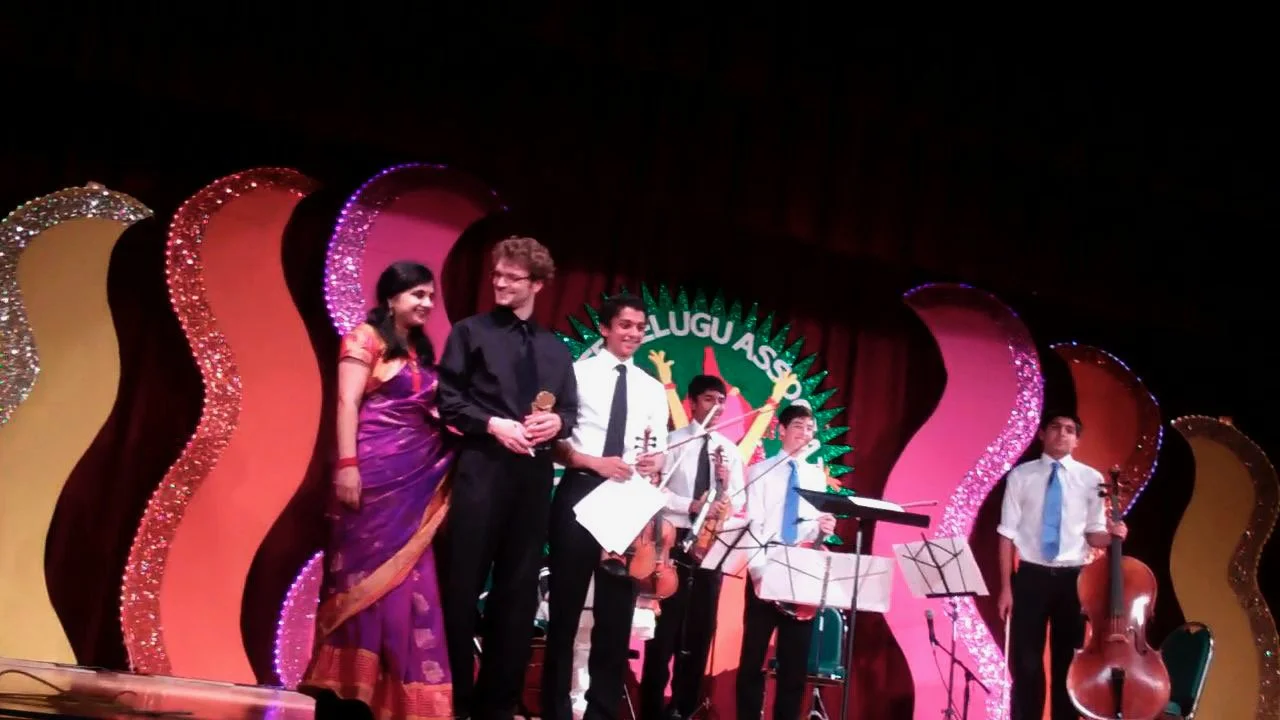
My most rewarding moment was not on stage but behind it. A patriotic string quartet… performed by four middle schoolers.
It sounded ambitious, almost improbable. To reimagine familiar patriotic melodies for a small string ensemble. But that is precisely what I set out to do with the help of John, my son’s cello teacher.
“Oh! I know this one Mom!, it’s the Indian national anthem isn’t it?”, my son said. I would not have expected him to know the others. “Vande Mataram” and “Saare Jahaan se Accha” are beloved songs all Indian children learn growing up. “Vinara Vinara , Desam Manade Ra” was an A.R. Rehman film composition. “Mile Sur Mera Tumhara” was a diversity anthem created for Television sung by musicians popular in the 90s.
With my son Bharat on the cello and his friends Manu and Anjana on the violin, and Grant on the viola, the quartet set out to present Indian patriotic songs in a form unfamiliar to an audience of Telugu speaking Americans.
What emerged was something new and rewarding . I’m not sure how much of the concept landed that day. But I remember what it meant behind the scenes , four young musicians learning to hold a collective sound with practice and patience.
It is one of my proudest moments as a mother and musician.
Mosaics not Melting Pots
My neighbor once remarked that the abstract painting of metallic leaves didn’t quite belong with the still life hanging above the dining table in my home.
You know those homes where everything is perfectly coordinated, every color, every piece of furniture, every decoration? Mine isn’t one of them.
My home is a patchwork of objects that were either a gift, a souvenir, or something I brought home because it captured an interest, a memory, or an emotion.
Maybe that’s why A. R. Rahman’s music resonates with me. I didn’t hear Carnatic, Hindustani, folk, Sufi, Western classical, jazz, and rock traditions disappearing into one another in his music. I heard every voice, yet together they created something entirely new. Much like the objects in my home, every piece carries its own story, and together they tell mine.
It is also why I find a Ragamalika, a musical composition named aptly after a “garland of ragas” so enchanting. This song is composed in multiple ragas all of which have the word “Ranjani” in them.
Ranjani, Sri Ranjani, Megha Ranjani and Janaranjani.
Egg Fugue Yeah!
When my daughter was in kindergarten, she watched my husband warming up the food and exclaimed, “Daddy, why are you doing that? That’s Mommy’s job.” The comment stung.
“If you cook every day, that’s what your family will expect you to do,” a neighbor said. She wasn’t wrong.
The truth is, I enjoyed cooking. I might have started cooking because it was expected of me. Failing to meet expectations was frankly, anathema to me.
Then I became good at it. I liked the compliments. And I was not willing to give up control of my kitchen . It is no wonder that my husband calls me a “Kitchen Nazi”.
Maybe if I had done less of it, I would have had more time to sing. It took me a long time to delegate both at home and at work. But eventually I did learn to let go , a little bit anyway , like with eggs.
My husband started to make scrambled eggs for the kids. They squealed over his soft, squishy eggs and preferred them to my spicier version.
My son made his grandpa omelettes for brunch one Saturday and claimed the cleanup after dinner, a chore his sister was happy to leave to him.
My daughter discovered she loved baking. Every Thanksgiving her desserts became a little more ambitious, and before long they were the stars of the table.
When Jae June, our son-in-law joined the family, he cooked Bibimbap and put a fried egg on it.
An Education in Loving
“How come you don’t sing as many Lata Mangeshkar songs?” my husband asked as I sang “O Mere Sona Re Sona Re Sona Re “ and washed the dishes.
“Because I find them boring!” I said.
He looked offended. Then he told me he had a favorite.
“Would you learn to sing it for me?”
The song was Aap Ki Nazron Ne Samjha, Pyaar Ke Kabil Mujhe. And I was mortified.
I fixated on the title of the film, Anpadh (“uneducated”), and hastily took his fondness for the song as a reflection of his views on women, marriage, and equality.
The truth was that I was deeply insecure. I had seen too many women become invisible, undervalued, and trapped in unhappy arranged marriages. “Marriages are made in heaven but lived in hell,” I often said.
He heard something entirely different. To him, the song celebrated the quiet triumph of a successful marriage like his parents’, one in which what mattered most was not education, intelligence, wealth, but the way they made each other feel: seen, cherished, and worthy of love.
Later, I would discover that Mala Sinha , the star of “Anpadh” was my father in law’s favorite actress.
We would spend the rest of our lives allowing for Gibranic spaces in our togetherness so we could value in each other what we ourselves lacked.
Two counterpoint selves , bound by marriage , learning to make music together.
My Voice , My Purpose
I took my voice for granted. Yes, I did. I was so busy living my life, I lost my voice.
No warm-ups.
No daily practice.
I didn’t avoid cold or spicy foods.
Moving to a new country, building a family, work stress, choosing convenience over discipline, spending my vocal energy on everything else but singing—all of it took a toll.
But the truth is, it was a gift I squandered.
And I did plenty I shouldn’t have with the voice I was supposed to be protecting. I talked, a LOT. I shouted. Sometimes I screamed. I yelled.
“Hurry Up, the school bus is leaving!”
“Do your homework, NOW!!”
“You just don’t UNDERSTAND!”
“I CANT HEAR YOU! Come down and talk to me!”
“How DARE YOU talk to me like that!”
By the time I reached my forties, my voice had been reduced to a squeak.
That dreaded moment every singer fears, arrived. I got rejected from an audition because I sounded pitchy.
How did that happen? I scolded myself with self loath.
“Your nemesis is singing,” my husband would say, and I would wince, both at him and at the song playing.
I couldn’t bear listening to Shreya Ghoshal. Her effortless range, her beautiful tone, her soaring voice, everything I had once aspired to, now felt out of reach.
I tried speech therapy, meditation, exercise, even changing my work role. Nothing seemed to bring it back. I found myself asking a deeper question:
Could I live the rest of my life carrying the lessons music had taught me, even if I could no longer make music myself?
Or was there still a way to find my voice again?
The Guru Within
Gurus can arm you with technique and provide a platform. But they cannot manufacture a feeling.
When I returned to Carnatic music lessons after a twenty-year hiatus, Rajeshwari Aunty would often ask me, “What would you like to learn?”
It seemed like a simple question, It wasn’t.
I had spent years expecting music to be given to me, to receive lessons, follow instructions, and reproduce faithfully what was taught. I had never thought of myself as someone who could choose my own musical path.
I learned this song from an MS Subbulakshmi record I owned. When I sang it for Aunty, she listened intently and helped me correct some of the gamakams.
When the time came to perform, I found myself confident in my new avatar, the musician I had discovered within. For the first time the feeling wasn’t demanded by a teacher or an audience it was unleashed from within, . That was the turning point.
I began learning music independently, returning to Aunty not for every note, but for guidance, validation, and the wisdom of a teacher who had taught me how to become my own student.
The Timeline of Grief
“America is alive only on the weekends!”, my father used to say observing how we would morph back into the automatons that the work week demanded.
Even the longer trips they made to the U.S felt like they lasted only a few weekends. The rushed phone calls in between errands, the trips to India that started to feel less like returning home and more like expeditions, the thirty-six years since I left home, all of it feels compressed, as though time itself has accelerated.
Before Amma passed away after being in a coma for 43 days, I got to spend the last two months of her life by her side, her vacant eyes and silence were punishment enough for the sentence of distance.
Next year will mark ten years of becoming untethered.
I visit my sister Jaya for Diwali, and I watch her celebrate with the same exacting attention to detail that Amma did, unwilling to let any of it go. The Murukkulu have the same crunch, the Boondi laddoos are as delicious as Amma’s, her girls stamping out the Diviteelu next to the Muggulu or Rangoli outside the front door like we once did, the same brass diya holder Amma bought for all of us still sitting in the Puja mandir.
My grief, meanwhile, seems to mirror the time I gave Amma, arriving in fits and spurts. Sometimes, I will see a hospital bed on TV and look away. Sometimes, I’ll be halfway through a song I am singing on the way to the grocery store, and grief catches my voice before I can finish. I sit in the window seat of the plane, staring at the passing clouds , humming a song as I wonder which cloud she inhabits.
Amma and Akka
We were visiting my sister in Dallas, a couple of years after Amma had passed away. My brother in law had just turned sixty. They didn’t celebrate this milestone with a Shashtipoorthi , but they organized a Bhajan at the local Lalitha Peetham situated in a strip mall.
I wasn’t a fan of Bhajan singing. It didn’t feel devotional to me at all. I got distracted by the loud, often out-of-tune, off pitch singing. I felt guilty. It was Amma’s favorite musical activity and Akka’s too. Akka had given up musical training early on. But she continued to participate in Bhajans and devotional chanting all her life.
I sat behind my Akka when the program began with the chanting of the Lalitha Sahasranamam, admiring how she knew all the shlokas by heart while I still needed to read the lyrics. I was worried I might be mispronouncing some words.
Then the Bhajans began. I sang the ones I knew in a soft voice. Halfway through, I noticed Akka get up and move to one of the chairs lining the wall. Her back was probably hurting. When a Bhajan I didn’t know began, I looked around the hall. Some men were standing at the back. Many men and women sat cross legged, their faces solemn like my brother in law’s. Then I looked across at Akka. Her eyes were closed. Tears streamed down her face. And as more tears came , her voice grew louder. Still louder. Until she was almost screaming, as if she was finally letting all her grief out.
Afterwards during lunch , which was cooked and served by the volunteers there, I learned that one of them had just recovered from a battle with cancer. Another lady had just lost her father.
“That felt so good ya!, Akka said as we got back into the car and drove home.

Mother & Son
Our daughter got married during COVID, when dancing at weddings was prohibited. We were disappointed, but we understood.
Then, the week of the wedding, the regulations changed.
Overjoyed, Sruthi broke into her signature “food baby dance”, a routine she had invented after particularly satisfying meals, complete with belly rubs, confident struts, and exaggerated swagger. It suited someone whose playlists jumped effortlessly from Bollywood Oldies to Doja Cat.
Not everyone we loved could be there. Jae June’s father was unable to travel, but we watched, teary-eyed, as Jae led his mother, who was dressed in a traditional hanbok, onto the stage. It was one of the most graceful moments I have ever witnessed.
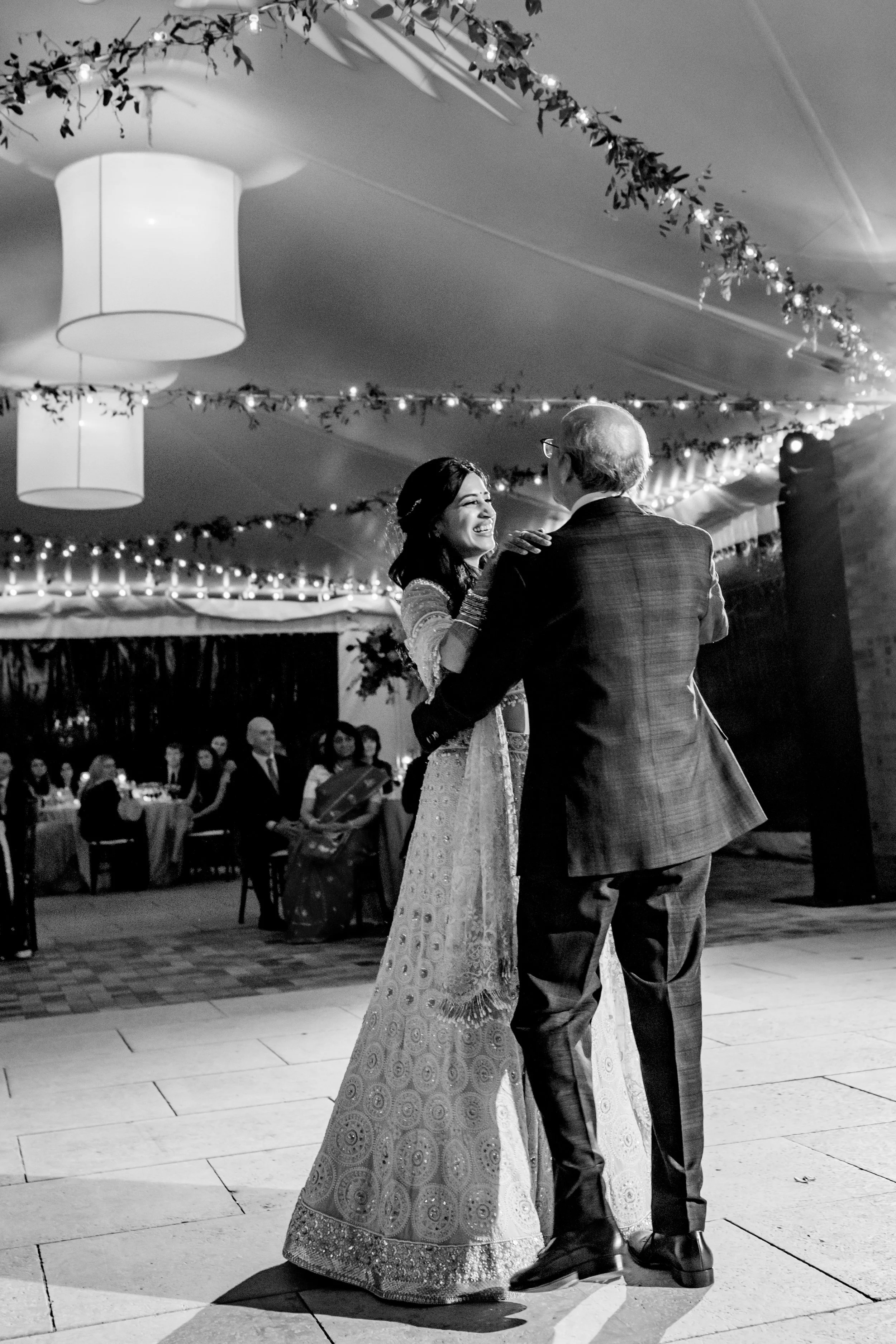
Father & Daughter
Then it was Sruthi’s turn.
She took her father’s hand, and together they danced to a song she had loved since childhood. Watching them, I realized that after months of uncertainty, this was the moment we had almost lost.
Dil to Bhara Nahin tha, magar Aankhen Ansoo-on Se Bhar Pade.
Sutradhara
It was a cruel irony. We had helped my husband’s parents get green cards so that they could become a part of our life in America, yet they chose to remain in India, for reasons that felt right to them. Once again another pair of sliding doors opened and closed on our faces.
It is one of the burdens of immigration: we and the people we leave behind miss the small moments along with the big ones—the first words of a grandchild, a promotion at work, a milestone anniversary, a family wedding, an emergency surgery, or a funeral.
My father-in-law had been showing signs of dementia in the last few years of his life, but distance made it difficult to see how much and how rapidly he was declining. Then, a couple of months before our daughter’s wedding, my mother-in-law broke her hip. We rushed to India. It became painfully clear that she, too, had been struggling under the weight of caring for him. We arranged home care to tide them over until the wedding and returned to the U.S. to prepare for it.
Through it all, I watched my husband as he stood beside his mother and his daughter with the same patience and presence, never making one love compete with the other. His strength and steadfastness inspired me. And perhaps it is no wonder that he loves the drums.
It is in his nature to anchor the band.
After the wedding, he rushed back with his siblings to move his parents into memory care. I stayed behind to prepare our house for sale and our life for its next chapter. We talked every morning and evening.
One evening, I recorded this song and sent it to him so he would wake up to it. He called me the next night. “That felt like you were sitting right next to me!” he said.
Perhaps I was not wrong in rejecting the mangala sutram in the gendered context in which I encountered it. Life taught me to see it differently , not as a thread binding a woman to a man but as all the invisible threads that weave us together with the people we love. Perhaps the thread was never about binding , it was about belonging.
Music is the Teacher
A friend once made a passing remark that stayed with me: “If you had been born into a Tamilian family, perhaps you would have reached greater heights in Carnatic music.”
I pondered over her comment. It was a kinder way to say what I already knew but failed to admit.
Perhaps a deeper immersion in one hobby , one genre or one lineage might have taken me further than I ever went.
Perhaps my journey looked different because I was never tied to any one tradition, one lineage or one place.
I’m as happy if not more, singing in my living room with friends as performing for an audience. I cared more about singing than I cared about being a performer. What I’ve wanted all along is not simply for my voice to be heard, but for it to be understood.
A river doesn’t know which mountains it will wind around, which banks will shape it, or which fields it will irrigate. It keeps moving toward something larger than itself.
Music taught me to listen, to adapt and to find beauty in difference.
I may have had many music teachers. But music itself has always been my teacher.
“FINAL MOVEMENT”
Bengali Blessings
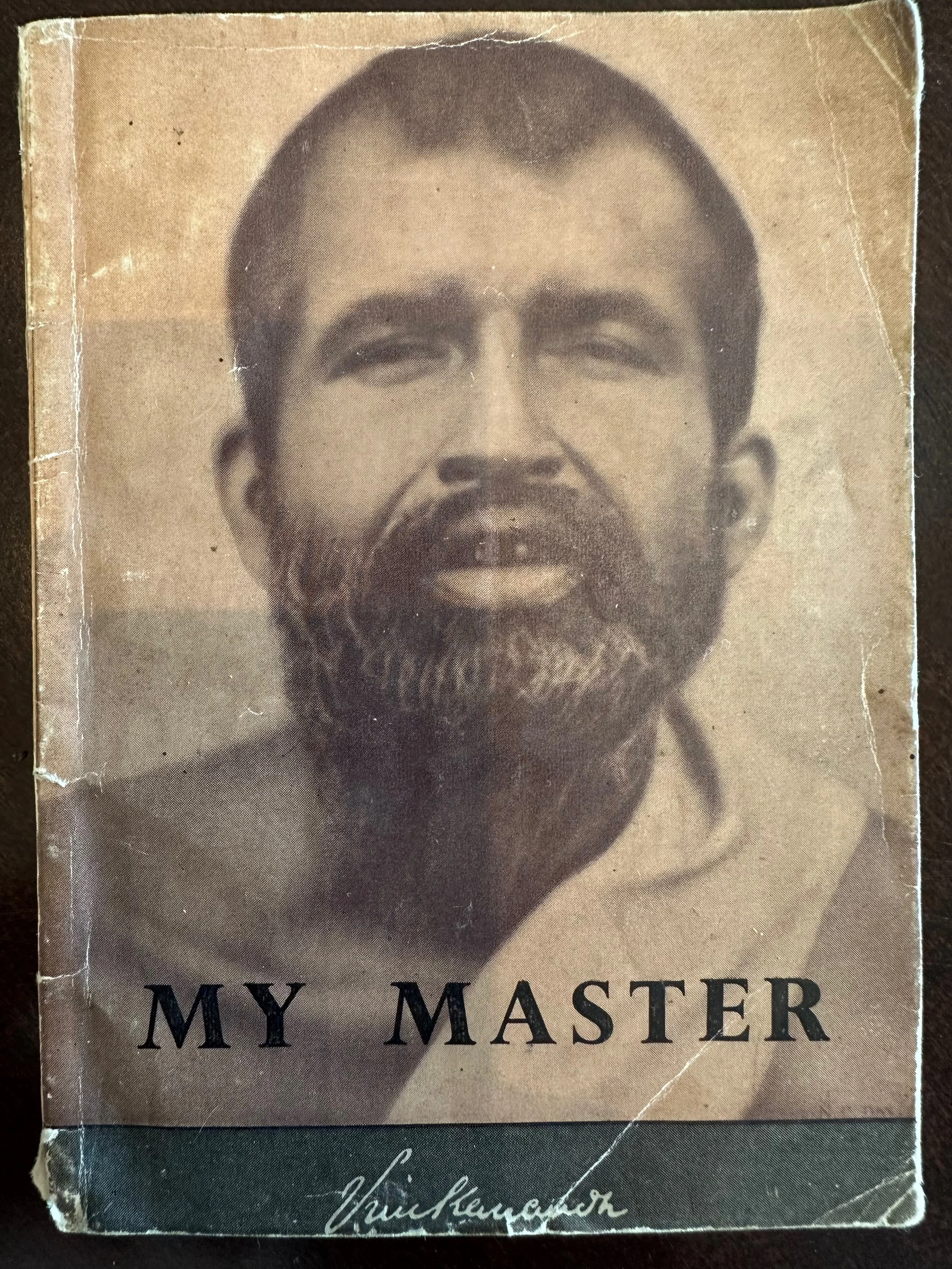
Sunday School
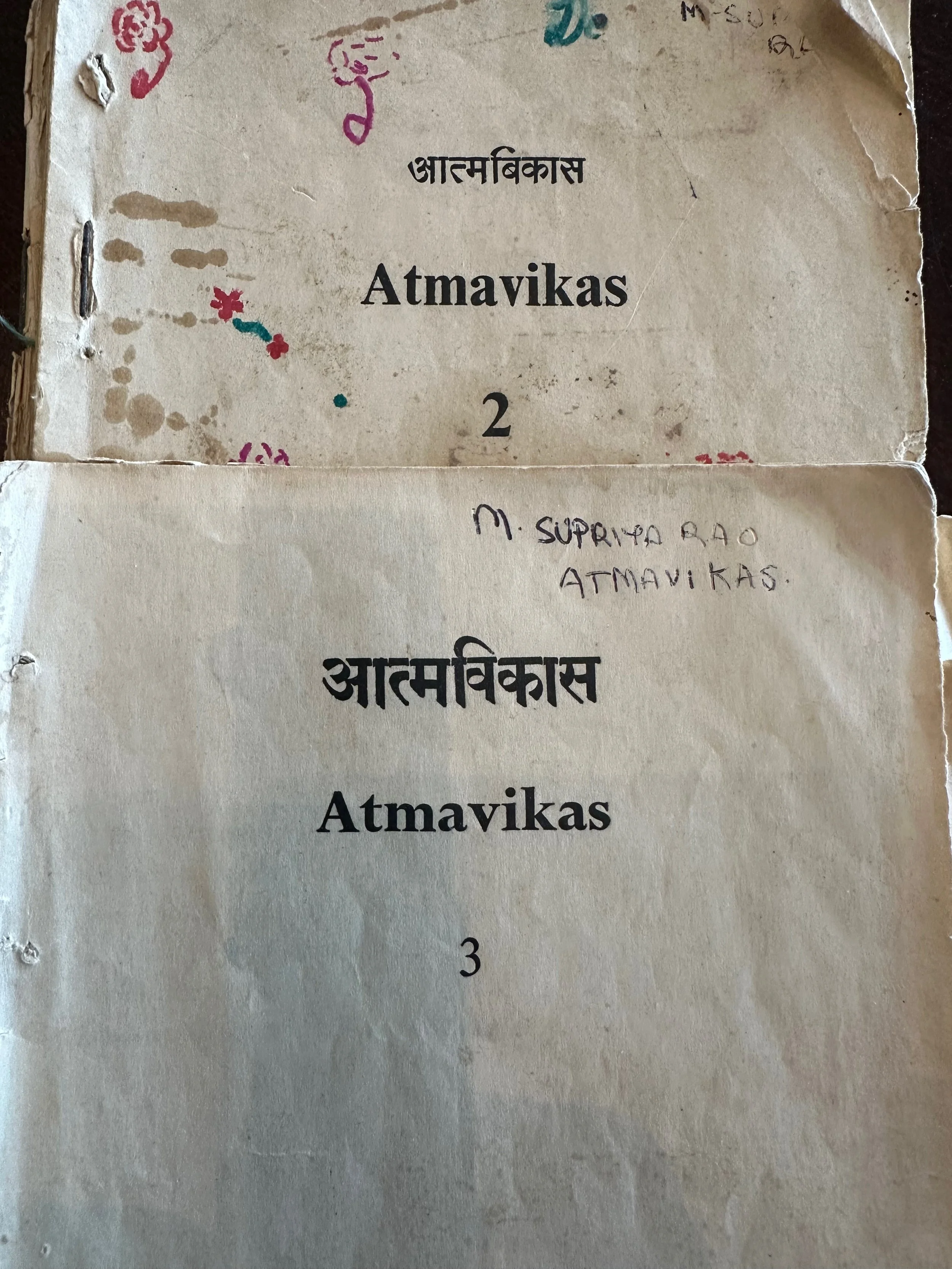
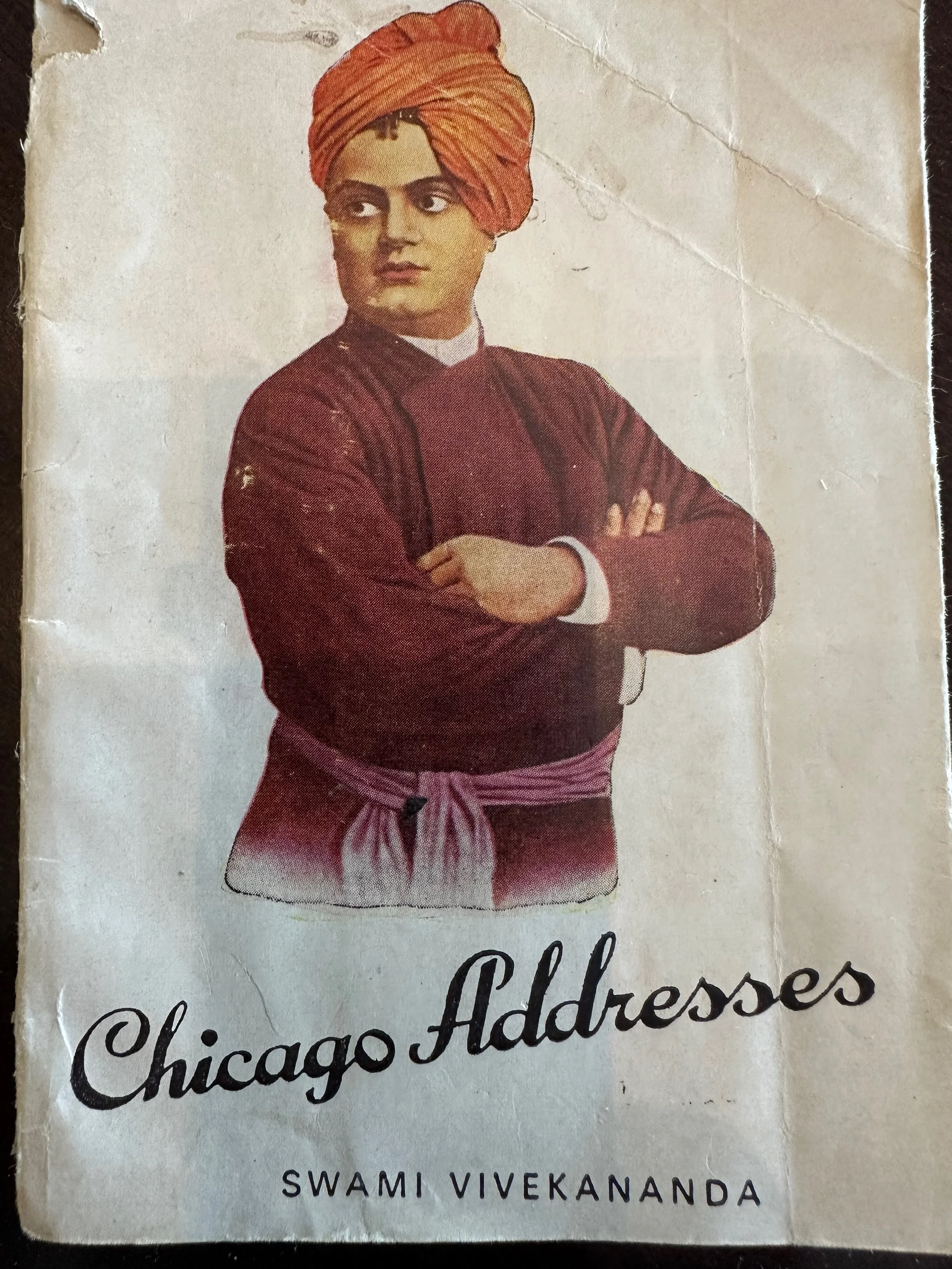
The benevolent, omniscient eyes of Sri Ramakrishna Paramhamsa , Sharada Ma and Swami Vivekananda met my gaze, from photographs that adorned the walls of our home as I got ready for Sunday school in Belur Math.
Khichidi and Sandesh
I waited patiently for the Sandesh that came after the Khichidi, the prasad at the end of Bal Vihar that was served in a bowl made of dried banana leaves. The Khichidi tasted nothing like what we ate at home. The Sandesh, on the other hand, was sweet—a taste as universal as music, a language we all understood.
Janmashtami
The Pujas, with their Pandals, music and dance were my favorite time of year in Calcutta. Amma especially loved the Janmashtami celebrations at Belur Math and carried that tradition with her for the rest of her life . Even though we left Bengal , Bengal , its musical and spiritual traditions endure in Amma’s heart and in our memories.
Two Honeymoons
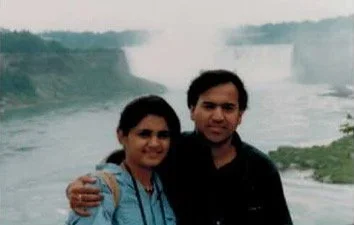
We did terribly. It was one of those party games where couples answer questions about each other. The most embarrassing miss? “Where was your honeymoon?”
I wrote Mussoorie. My husband wrote Niagara Falls.
A few days after our wedding, before my third-year finals and before he flew back to the U.S., we squeezed in a brief trip to Mussoorie. It wasn’t Kashmir, but our marriage had just begun to hum itself into companionship.
A couple of months later, I landed in America, and we took our first trip together to Niagara Falls in Canada. By then, the long-distance uncertainty was behind us, and the relationship was discovering its rhythm.
As it turned out, we were both remembering different beginnings , I, the beginning of a marriage , him the beginning of our life together. Regardless, this is a song that puts a smile on our faces.
Amma and Daddy’s 50th Anniversary
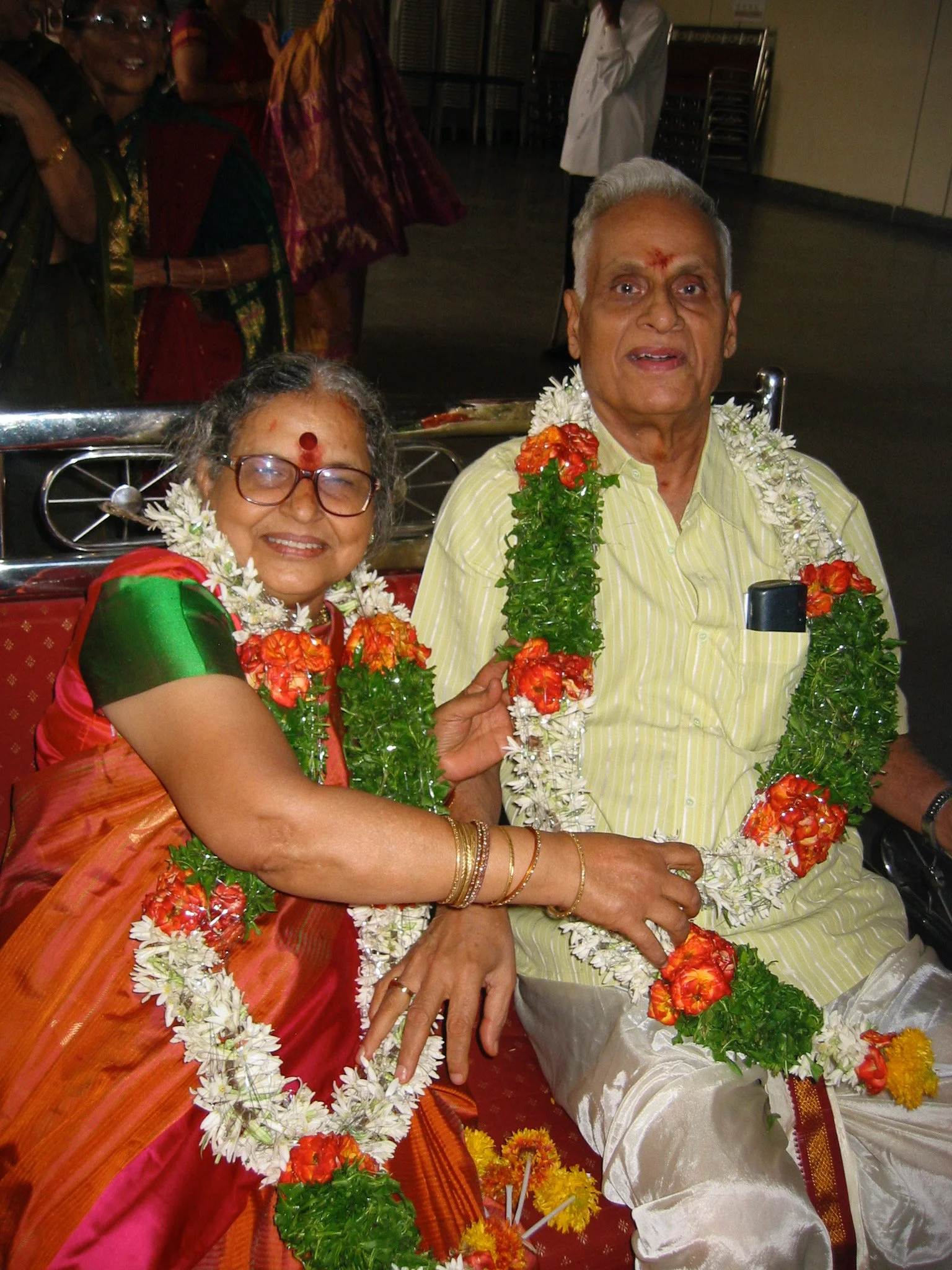
My mother, with flowers in her hair, a garland around her neck, and her signature big red “bottu”, sat beside all five of her sisters. She was the youngest of them all and the only one who got to celebrate her 50th wedding anniversary.
I stood on stage looking down at her, signaling that I was about to begin my concert in honor of Amma and Daddy.
And when I started the song, my aunts beamed and nodded along to the lyrics.
In this krithi, Tyagaraja writes that Rama became a Maharaja as a consequence of his marriage to Janaki. And as I sang those words to my mother, also a Sita, I realized how fitting they were. For her presence had transformed not just my father’s life, but the lives of all of us who came after.
Cross Examination

My daughter had a knack for asking questions I wasn’t always equipped to answer—and making choices I wasn’t always brave enough to make.
“What will happen to us when the sun dies, Mommy?” she asked one afternoon on the drive home from kindergarten.
I wasn’t sure whether to give her the scientific explanation or address the anxiety hiding beneath the question—the fear of endings, and perhaps, of death.
She asked her father the same question. His answer was immediate.
“We will be long dead and gone by then, Sruthulu! Nothing to worry about!”
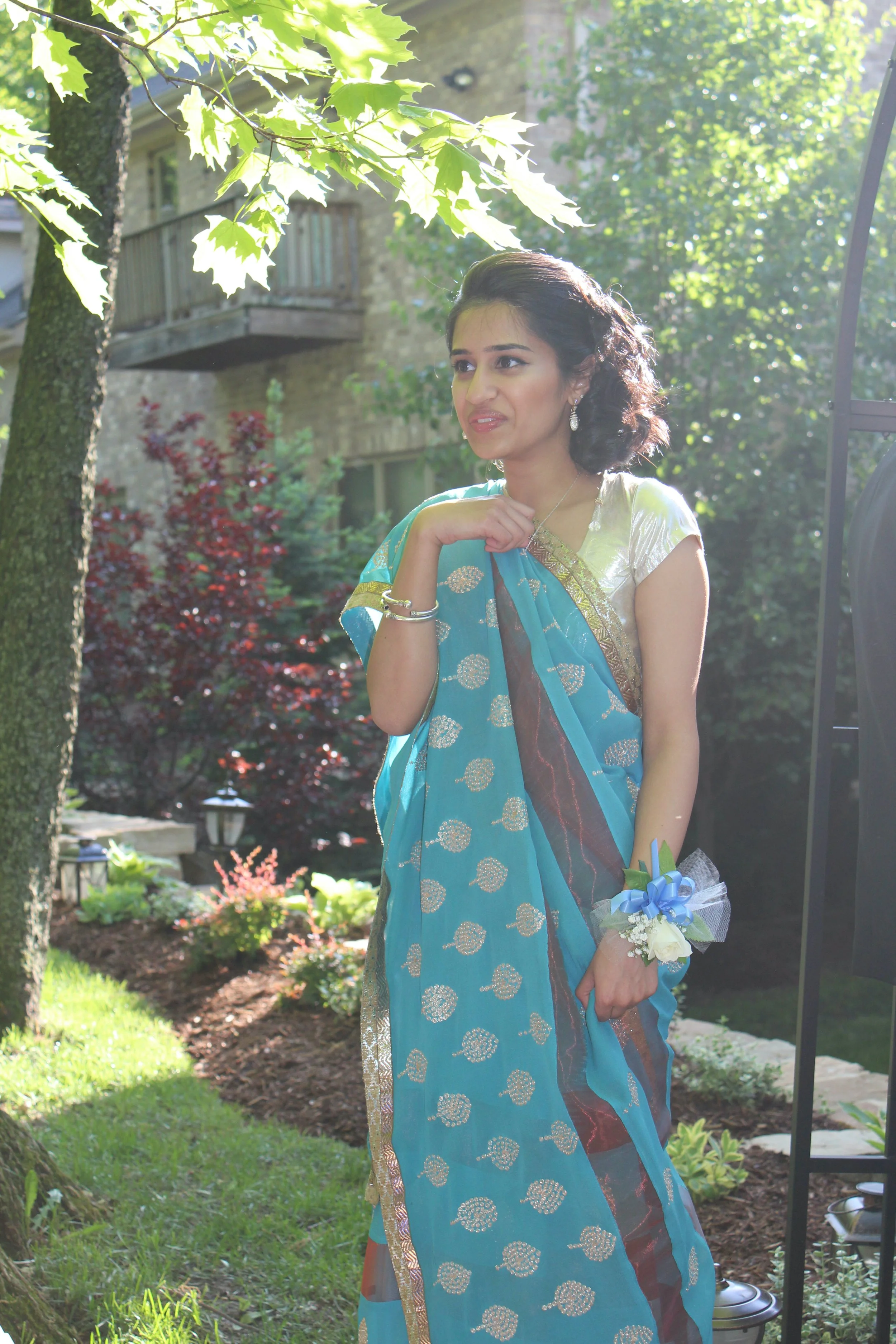
While everyone around her seemed to be pursuing STEM, she chose History and International Affairs.
And then, as a teenager she asked me, “Mom, would you rather I married a Hindu or an Indian?”
She wore a saree to her high school prom. A part of me was bursting with pride; another part worried about whether she would be accepted.

She always questioned assumptions, looked for evidence, and made up her own mind. Not only did she challenge my answers , she made me a better thinker. I should have recognized the litigator in her all along.
She had learned music and could sing, but she chose words as her instrument. Whatever she writes is music to my ears.
Where the Wild Things Are On a Weeknight
‘Kids , are you ready to rock and roll?’ , my husband said as he turned the car around .
It was hump-night in a week packed with after school activities and bookended by tests.
We had just finished dinner at Biaggi’s Ristorante Italiano and were driving home.
Their tired ears perked up. We bought popcorn and KitKats and watched “Where the Wild Things Are”.
The children still look back with fondness on the joy of that unexpected detour.
His spontaneity became a gentle contrast to my structure in parenting.
The Family Performance
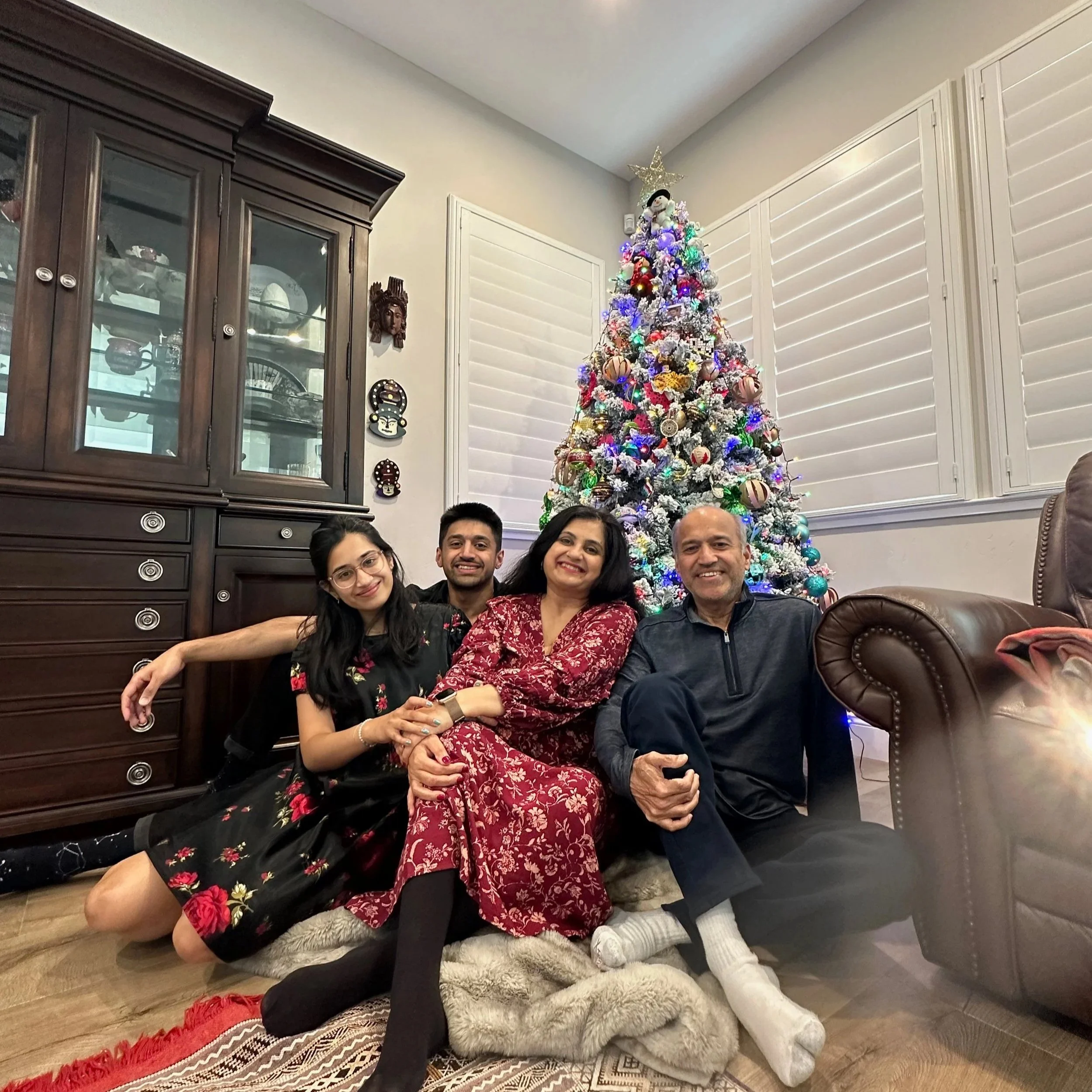
After years of music lessons, we tried to get our children to sing with us. By then they were teenagers. If you’ve ever raised teenagers, you’ll know that was a losing battle. And so, we gave up. Until one Thanksgiving.
We were gathered at a cousin’s home studio when, almost on a whim, we decided to record a song together. No grand plans. No audience. No expectations. Just our family, making music.
To this day, it is the one and only song we ever performed together.
And that’s exactly why I cherish it. A small moment, captured in time, before life carried us all in different directions.
But I’ve learned never to say never. I wish someday, somewhere, we’ll find our way back to that studio magic again.
The Kindness of a Stranger
The kids were fighting in the back seat when the car started sputtering. I pressed on the gas, but it barely responded, and I managed to coast through an intersection and pull over. I had run out of gas.
I waved down passing cars and called my husband. No answer. AAA said it would be at least 45 minutes. I tried to hum to quieten the din of my heart beating . All I wanted was to get the kids home to safety. Then a man who looked like he hadn’t showered in weeks pulled up in a beat up car and asked if I needed help. I hesitated for a fraction of a minute, then I let him drive me to the nearest gas station. I asked how I could repay him.
“Just fill my tank while you’re there,” he said. We got the gas, returned to my car, and went our separate ways.
When I recounted my story , no one cared that I’d run out of gas. They were horrified that I’d accepted a ride from a stranger. What stayed with me wasn’t the breakdown or my carelessness but how people assumed danger, and overlooked a man’s kindness.
Sometimes the stories we tell ourselves about strangers reveal more about us than they do about them.
The Audacity to Sing
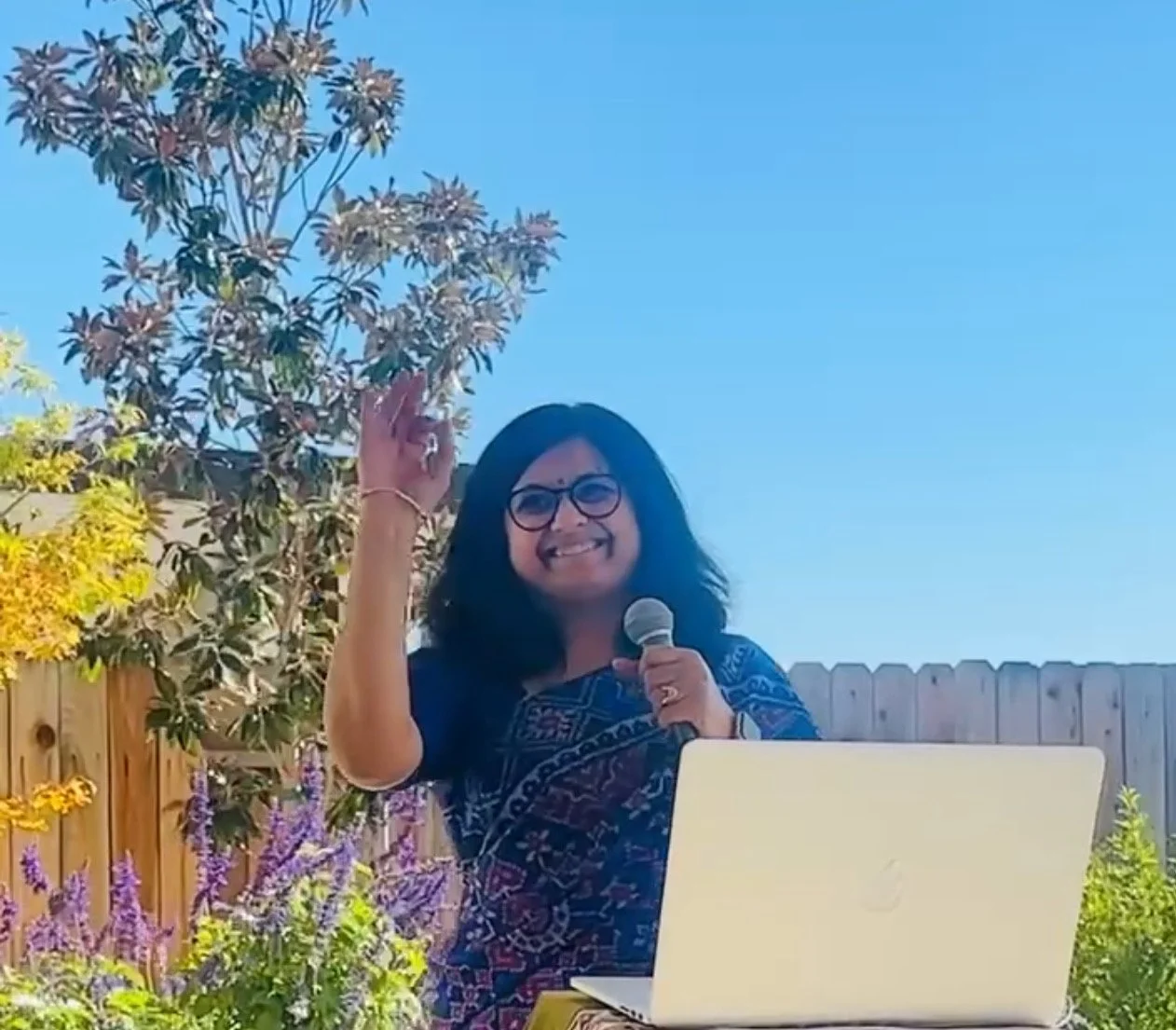
Sorry, Picchamma! You sound shrieky,” my husband said. I could always count on him to tell it like it is. When I sang the song a whole octave lower, he shook his head. “No! You sound like a man!”
“I can’t sing it at the original pitch! What do you want me to do?”, I shot him a freezing glare.
When I resumed my Carnatic training, I only ever sang in G, the default pitch for female Carnatic singers. Most Bollywood songs , especially duets were arranged around the male voice, often in D, five semitones above my G and well outside my comfort zone.
My music group was brainstorming songs for an upcoming Bollywood performance, my first in fifteen years. I tried one song after another, only to reject them because the pitch was too high for me. Finally, our director suggested lowering the pitch.
I was amazed. You could actually change the pitch of a song?
We lowered the karaoke track by a semitone. I pressed play, started singing—and suddenly, the notes seemed to find a home in my voice. It felt like slipping into an old sweater and settling down with a warm bowl of noodles. I was thrilled.
Powering that musical abracadabra was some of the same mathematics I had encountered decades earlier: Fourier transforms break a complex sound wave into its component frequencies, allowing them to be manipulated and reconstructed as sound. Math was helping me do something very simple: keep singing.
I spent my career building the networks that helped the world communicate. Today, I use them to send one very personal signal: my voice.
Contentment
I never became the concert vocalist I dreamed I could be. I never became a playback singer, nor toured with bands as I once imagined.
But why measure a life only by the dreams we chase, and not by the things we choose to nurture.
There are so many things we spend a lifetime nurturing: a job into a fulfilling career, a hobby into a calling, a marriage into a partnership, children into grounded adults, a house into a loving home. None of them happen overnight. They take time, attention, patience, and often sacrifice. Maybe one can have it all, but surely not all at once?
I guess the question is not whether I became everything I once dreamed of becoming. The question is whether I cherish what I have become. Maybe I simply need to learn to B, like my son once taught me.
I often called my son Bharat, by his nickname , “Mr. B”.
“Why didn’t you get an A on your math test? Mr. B?”, I once asked him, to which he playfully replied, “Why won’t you let me just B!?”
I laughed out loud , tongue tied.
Sounds of Silence
I detested silences. Like the ones that hang after an acrimonious fight, the ones that shroud misunderstandings, or like the ones that arrive when you’ve run out of things to say.
My cousins still remind me that, as a child, all they had to say was “Kada?” meaning “Right?” or “Mari? meaning “So?”and I would gladly continue or repeat myself.
I hated for the story to end.
I didn’t always know the lyrics to the songs I loved. Sometimes I sang “la la la”; sometimes I made up gibberish that rhymed so that I could sing the tune out aloud, much to everyone else’s consternation.
The words may have escaped me, but the melody captured my heart long before I understood what the song was saying. Who needed words when the tune could speak for itself?
Over time, though, the way I listened to music changed. I began to pay attention to the poetry of the lyrics, the stories hidden within the words, and the way the instruments conversed with the melody to complete the song.
Today, when I listen, I hear more than a tune. I hear a conversation between words, notes, and silence.
The song hasn’t changed. I have.
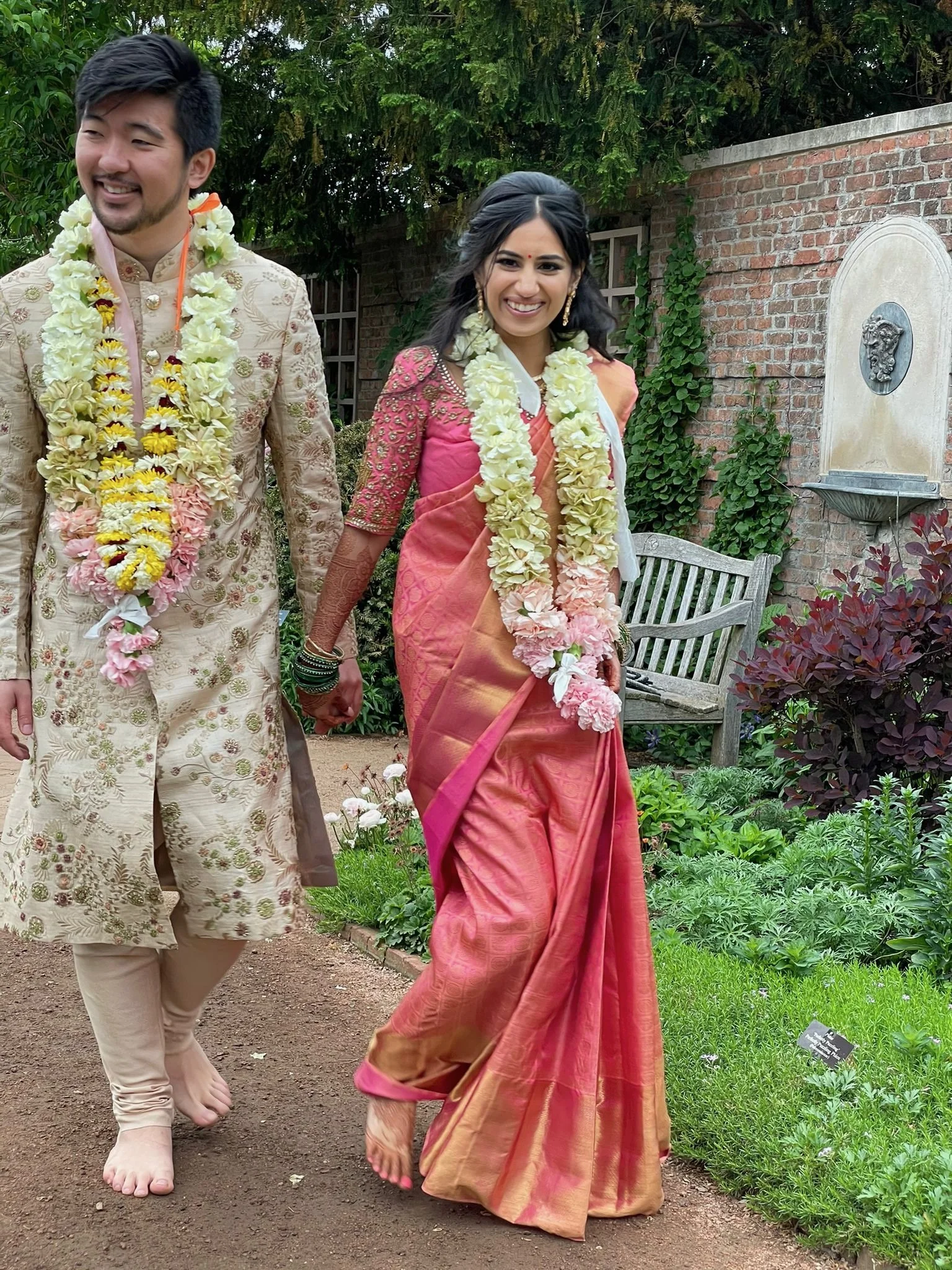
Agape meets Mand
When my daughter Sruthi brought Jae June home, our first discovery was that he loved upma and uttapams, thanks to his time studying and traveling in India.
But food was only the beginning. As we talked, I listened to his calm, thoughtful voice as he shared his story, the struggles that had shaped him, and why he had chosen to study philosophy in college. Somewhere during that conversation, all the questions I had quietly carried about whether a multicultural marriage could truly work slowly disappeared. I stopped ruminating on our differences and started seeing the character of the man my daughter loved.
They were married a few months later, at the height of the COVID pandemic. On the wedding day, the weather forced me to make a call, move the ceremony inside or risk getting rained out. I decided in favor of Sruthi’s dream, to be married in a beautiful garden. Sruthi walked down the aisle to Agape, followed by the tender strains of Lalgudi G.J.R Krishnan’s Thillana in Mand on the violin. And as they walked back down the aisle, hand in hand to Amor de Mis Amores by Natalia Lafourcade, the rain clouds that had held their breath throughout the ceremony finally broke, pouring down as if nature itself had been waiting for the celebration to end before offering its own jubilant benediction.
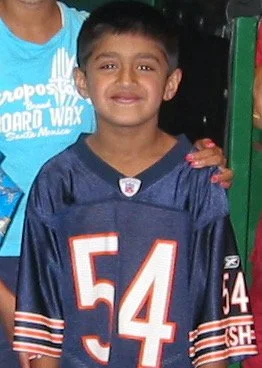
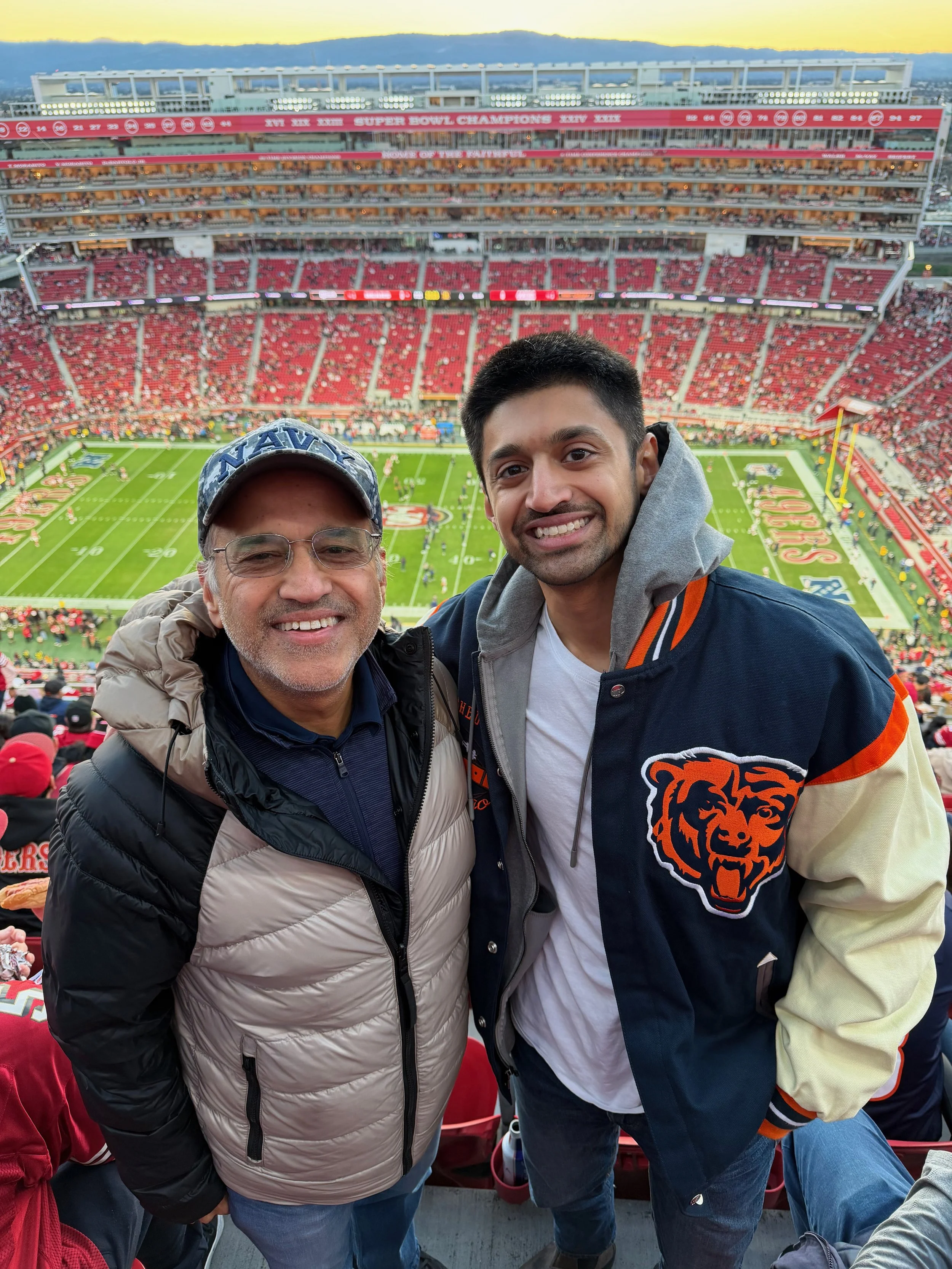
Football Fans
On any given Sunday during the decade before I first became an empty nester, our house had its own predictable rhythm.
My teenage daughter would be behind closed doors, chasing Wikipedia links while pretending to do homework or covering her walls with poems written in chalk. My son would be rushing through his school assignments, and my husband would get through his honey-do list, just enough to earn a guilt-free afternoon on the couch watching football.
Every now and then, I would pop my head in and ask questions like, “What’s the difference between a kick and a punt?” They would politely and sometimes not so politely shoo me away. But I wanted my Sundays back with my family. So I bought Football for Idiots and joined them on the couch.
Soon, we had a ritual. When the anthem played, my son and I would stand together and belt it out. At halftime, our daughter would grace us with her presence, usually to deliver a detailed critique of the music, the performance, and occasionally the game itself. Every touchdown brought a screaming victory lap around the room from my son. Later, we would sink our teeth into a thick, juicy slice of Lou Malnati’s pizza.
That’s how we became Team Chicago Bears , for whom I eventually broke a few vertebrae at Soldier Field , in the middle of a blizzard .
Until We Meet Again
“At least call to check if I’m still alive!” my mother would say, half in exasperation.
Yet I couldn’t bring myself to call her more often. Even on Saturdays, I would lie in bed until three in the afternoon, waiting for my husband to board his flight before forcing myself to shower and make myself a meal.
While my husband flew every Saturday from New Jersey to Chicago to get his M.B.A., I, having recently graduated, was stuck in the loneliness between friendships from school that faded because I was the married one and colleagues I couldn't relate to.
Like Harold. I didn’t know how to deal with a passive-aggressive bespectacled middle-aged man who would insist on squeezing into my cubicle to ‘explain’ when I would ask for project documentation or how to confide in Lori, the technical writer whose cake recipes came with advice like, “Wear a wedding band! Or men will hit on you!”. The only other Indian in the office was a single man named Prasanna who played the guitar but spending time with him felt awkward.
When juggling work and first-time motherhood got difficult , my mother in law offered to raise my baby in India . I begged my mother to stay longer but she told me being in America felt like a prison. I was annoyed but I understood. At least the loneliness part of it, I guess?
Twenty years later, during a visit with my mother, I burst into tears as I recalled her accusation. She comforted me in the way only a mother can.
“It’s okay,” she said. “Since then, you’ve only called and visited for my needs, never for your own.”
By then she was frail, weakened by multiple heart attacks and raging diabetes. Yet she never missed a beat. She rinsed the dishes a second time, set the yogurt and coffee decoction for the next morning, and cleaned her beloved puja room before collapsing into bed in one of her soft, cotton sarees, with one tired request:
“Oka paata paadave.” Sing me a song.
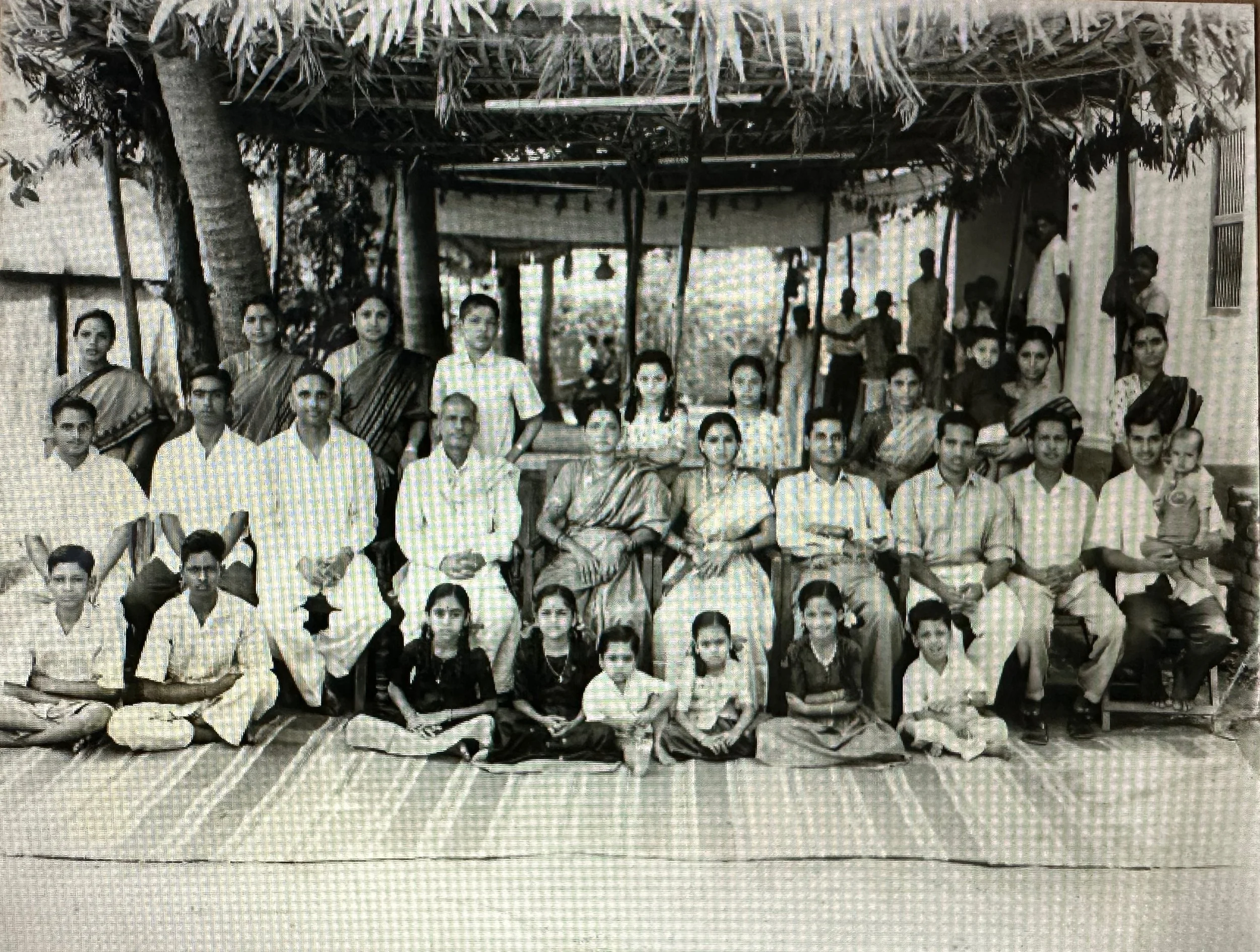
I resisted my drooping eyelids with all the strength of my three-year-old body so my mother wouldn’t stop singing, while my older sister sat beside me listening.
In the adjacent room, which my mother called the hall, was a foyer opening onto steps that descended from the high concrete platform on which the entire house stood. Off to the side, sat Tatagaru, bespectacled and dressed in a white half shirt and “pancha”, writing in a wood-and-cane chair. The steps were rarely empty. Town folk sat on them seeking his advice on legal matters and medical ailments, while the “paleru” brought the day’s provisions for my grandmother to inspect. The house stood above the village in more ways than one.
That is my earliest memory of my grandfather in Tanuku, Andhra Pradesh, where I was born. He was a lawyer by training, a freedom fighter and a Gandhian by conviction, and a homeopathic doctor by passion. But to his grandchildren, he was also the man who penned lullabies.
And yet, my own name told a different story.
In a family where my cousins were named Anand, Alivelu, Lakshmi, Prasad, Prasanna, Sai, and Srinivas, names drawn from gods, goddesses, and tradition, my father chose something unexpected for me.
I was named Supriya, after a Bengali actress he admired on screen. Even with the prefixes “Venkata Naga” added to my name, I sometimes wondered: had I arrived too late for my grandfather to write a lullaby for me?
I realized that my grandparents had left me an inheritance after all, not in jewelry or land, or a lullaby with my name in it. They left me music. A language I could write my name in.
Epilogue
For much of my life, I wondered where I belonged.
I wasn’t Telugu enough in Andhra.
Not Bengali enough in Bengal.
A Madrasi in Delhi.
Too Indian in America.
Now, too American in India.
But life and music have taught me something different. I no longer believe I have to choose.
I am every city I’ve called home. Every language I’ve spoken. Every person I’ve loved. Every song I’ve sung. Every mistake I’ve made.
One day, when my song is over, I hope these separate notes will dissolve into the wholeness from which they arose and I will finally belong.
Song: Purnamadah